
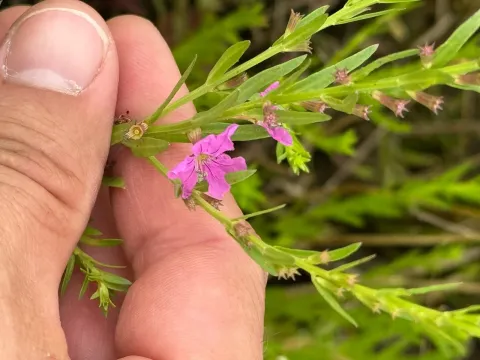
California loosestrife
Lythrum californicum
California loosestrife (Lythrum californicum) is a perennial herbaceous plant belonging to the Lythraceae family. Native to the Western United States, particularly California, this species is naturally adapted to wetland ecosystems, riparian zones, and moist meadows.
What the section contains
California loosestrife
Botanically, the plant is characterized by slender, erect stems that produce spikes of vibrant pink to lavender flowers. Its root system is exceptionally robust, allowing the plant to thrive in saturated soil conditions where air circulation in the root zone is often limited.
Climatically, this species prefers temperate zones with full sun exposure. While it exhibits tolerance to occasional soil drying, its growth potential is maximized in consistently moist environments. It is a reliable choice for areas with high water tables or heavy, poorly draining soils.
The ideal soil profile for this plant includes silty or loamy textures with a slightly acidic to neutral pH. It is not highly demanding regarding nitrogen levels, but periodic additions of organic compost help maintain vigor, especially when the plant is grown in competitive landscapes.
Economically, California loosestrife is highly valued for erosion control along water banks and as a source of nectar for native pollinators. It serves a functional role in restoration ecology, helping to stabilize soil while providing habitat and food sources for beneficial insects.
Disease resistance in Lythrum californicum is generally strong, although improper air circulation in dense plantings can trigger outbreaks of powdery mildew. Implementing adequate spacing between individual plants is the primary cultural practice to mitigate this risk.
Pest pressures remain low under typical conditions. Occasionally, populations of aphids or spider mites may appear during sustained periods of dry, hot weather, which can be addressed using standard horticultural soaps or specific biological control agents.
Weed management is critical during the establishment phase, as young plants compete poorly with aggressive grasses. Once fully established, the dense growth habit of the loosestrife usually suppresses most common weed species within its immediate vicinity.
Winter dormancy requirements are straightforward, though in colder parts of its potential range, severe freezing of the soil can damage crown tissue. Applying a protective layer of mulch during late autumn helps regulate soil temperature and ensures successful spring regrowth.
Monitoring the health of the plants is recommended during the early bloom phase. Early identification of any stunted growth or leaf discoloration allows for targeted interventions, keeping the colony healthy and preventing the spread of localized pathogens.