
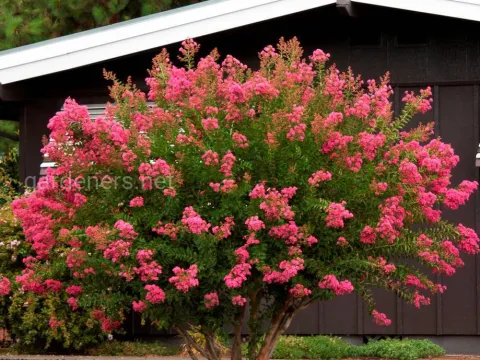
Crape myrtle
Lagerstroemia paniculata
Lagerstroemia indica, commonly known as crape myrtle, is a deciduous woody shrub or small tree belonging to the Lythraceae family. Native to the Indian subcontinent, Southeast Asia, and China, it is widely recognized for its long-lasting summer blooms and distinctive peeling bark.
What the section contains
Crape myrtle
The plant thrives in warm climates and requires full sun exposure to maintain vigorous growth and abundant flowering. While mature plants show tolerance to moderate drought, young specimens must be provided with consistent moisture to establish their root systems effectively.
Soil requirements for crape myrtle include well-drained, fertile loam with a slightly acidic to neutral pH level. It performs poorly in heavy, clay-rich soils that retain excess moisture, which can lead to root rot and other physiological disorders.
Proper agronomic management involves annual pruning performed in late winter or early spring before bud break. This process encourages the growth of new shoots, as the plant blooms primarily on current season's wood, ensuring a prolific display of flowers throughout the season.
In landscaping, this culture is valued as an ornamental specimen, a focal point in gardens, or a street tree. Its high resilience to heat makes it an excellent choice for urban environments, where other ornamental species might struggle due to high temperatures and reflective heat.
Common pests affecting Lagerstroemia include aphids, scale insects, and the crape myrtle bark scale, which can significantly stunt plant growth. Integrated pest management, including the use of horticultural oils and systemic insecticides, is crucial for maintaining plant health.
Powdery mildew represents the most significant fungal threat, characterized by white, dust-like spores on leaves and buds. Improving air circulation through thinning cuts and choosing mildew-resistant cultivars are the primary strategies to minimize disease incidence in commercial nurseries.