
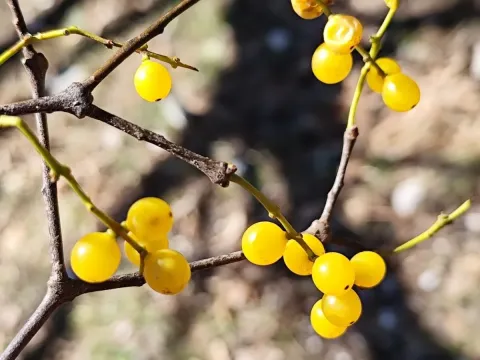
Loranthus
Loranthus
Loranthus is a genus of hemiparasitic shrubs belonging to the Loranthaceae family. In agricultural and forestry contexts, these plants are not considered crops but rather serious pests that attach themselves to the branches of woody plants to extract water and nutrients.
What the section contains


Loranthus
Originating primarily from tropical and temperate regions across Eurasia, Loranthus species have evolved to thrive by siphoning resources from host trees. Their natural distribution is largely governed by the presence of avian vectors, which consume the berries and transport seeds to neighboring branches.
Botanically, these plants feature leathery, opposite leaves and distinct flowers. They penetrate the host's bark and phloem using modified root structures called haustoria, which form a functional graft with the tree's vascular system, allowing the parasite to become physiologically integrated with the host.
The environmental requirements for Loranthus are strictly linked to the host tree's vitality. They prefer areas with sufficient light and humidity, frequently colonizing the canopy where they can maximize photosynthetic activity while drawing moisture directly from the tree's sap flow.
While Loranthus has no agricultural value as a cultivated crop, its presence is a significant challenge for orchard management. It disrupts the tree's growth cycle, leading to reduced yield and poor fruit quality, which mandates strict monitoring and active removal protocols in affected production areas.
The primary threat posed by Loranthus is the progressive weakening of the host tree. By diverting essential water and nutrients, the parasite causes stunted growth, canopy thinning, and in cases of severe infestation, complete branch dieback and eventual host mortality.
Managing the spread of this parasite is difficult because its seeds are sticky and easily adhere to avian beaks and feet. This mechanism of dispersal makes it nearly impossible to prevent the introduction of new seeds into an orchard or garden without integrated pest management strategies.
The most effective control method involves the surgical removal of infested branches. Pruning must be executed with precision, ensuring that the entire haustorial connection is removed, as any remaining tissue can potentially regenerate and continue the parasitic cycle.
Chemical control remains experimental and largely impractical. As of now, there are no selective systemic herbicides that can kill Loranthus without causing severe systemic damage to the host tree, making mechanical removal the standard industry practice.
Secondary infections are a major concern, as the attachment sites created by the haustoria represent entry points for fungi and wood-rotting pathogens. These opportunistic infections can further degrade the wood quality, compromising the structural integrity of the tree over time.