
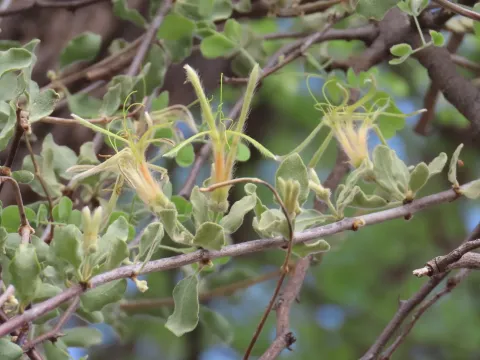
Erianthemum
Erianthemum
Erianthemum is a genus of hemiparasitic shrubs belonging to the family Loranthaceae. These plants are known for their epiphytic lifestyle, attaching themselves to the branches of various host trees to extract essential water and nutrients via specialized organs known as haustoria.
What the section contains

Erianthemum
The native range of Erianthemum is primarily across sub-Saharan Africa. They thrive in various habitats, including tropical and subtropical forests, as well as woodland savannas, where they occupy the canopy layer of the vegetation.
Botanically, these plants feature leathery leaves designed to minimize water loss, which is essential for survival at higher canopy levels. Their flowers are specifically adapted for bird pollination, exhibiting vivid colors and structures that attract nectar-feeding avian species.
Environmental requirements are closely linked to the host tree's health and the local climate. They require consistent moisture and temperatures, which are characteristic of tropical environments, allowing them to remain active throughout the year.
In terms of agricultural significance, Erianthemum is considered an invasive pest rather than a crop. It negatively impacts woody perennial plants, including fruit-bearing trees, by diverting nutrients that would otherwise be used for growth and fruit production.
The main threat posed by Erianthemum is its impact on the vigor and health of host plants. Infestation results in localized branch dieback and, in severe cases, a significant reduction in the overall yield of fruit trees, causing long-term economic damage.
Control strategies for this parasite center on mechanical removal. Pruning the affected branches is the most effective approach, provided that the infected material is removed and destroyed to prevent seed dispersal by birds that frequently visit these plants.
Chemical intervention is rarely used due to the physiological similarities between the parasite and the host, which makes it nearly impossible to target the parasite without harming the tree itself. Integrated management requires vigilant monitoring of orchards.
There are few natural enemies that successfully limit the spread of Erianthemum within anthropogenic environments. Consequently, human intervention through routine inspection and rapid response to early signs of colonization is necessary to prevent widespread infestation.
The persistence of this genus in the wild poses a continuous risk to nearby agricultural areas. Maintaining the structural integrity and health of trees through proper pruning and fertilizing can sometimes increase a tree's resistance to initial parasite attachment.