
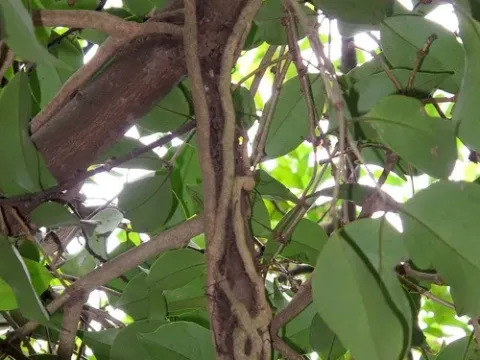
Macrosolen
Macrosolen
The genus Macrosolen belongs to the Loranthaceae family, commonly known as mistletoes. These are hemiparasitic plants that attach themselves to the branches of host trees, extracting water and essential minerals through specialized structures called haustoria.
What the section contains


Macrosolen
Native to tropical and subtropical regions of Asia, Macrosolen species are typically found in humid environments. While they perform photosynthesis, they rely heavily on the host tree for xylem sap, which is critical for their survival and reproductive success.
Botanically, these plants are evergreen shrubs with distinct, often colorful tubular flowers. Their seeds are covered in a sticky substance, which allows them to adhere firmly to the branches of trees when dispersed by birds, their primary vectors.
From an agronomic perspective, Macrosolen is not a crop but a plant parasite that can significantly reduce the vigor of fruit-bearing trees. It thrives in neglected orchards where high humidity and light penetration allow for the establishment of new individuals.
Managing Macrosolen in agricultural settings requires strict sanitation practices. Growers should prioritize the manual removal of infected branches and ensure that trees are pruned correctly to maintain airflow, which discourages the germination of parasitic seeds.
Macrosolen itself acts as a biological threat to plantation health. The primary damage it causes involves the physiological weakening of the host tree due to the continuous drain of water and nutrients from the conductive tissues.
Infection sites where haustoria enter the host tree often become entry points for secondary fungal and bacterial pathogens. These infections can lead to wood decay and significant structural damage to the host canopy.
Specific insects may target Macrosolen, but the proximity of the parasite to the main crop often facilitates the spread of these pests. Therefore, keeping the orchard free of mistletoe is a key component of integrated pest management.
The parasitic growth can lead to the death of limbs or entire branches if the infection becomes severe. This directly correlates with lower fruit yield and decreased life expectancy of affected trees.
Effective control measures focus on the early detection of small parasite seedlings. Regular inspection rounds, especially after the rainy season, are essential for identifying and removing Macrosolen before it establishes a deep vascular connection.