
Peraxilla
Peraxilla
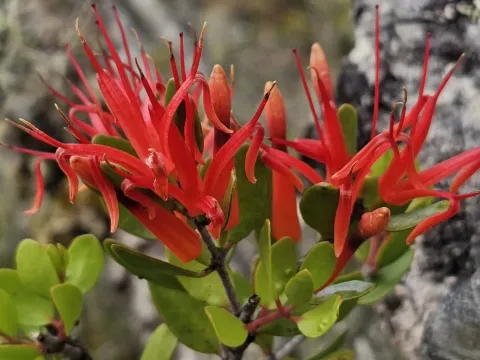
Peraxilla is a genus of hemiparasitic shrubs belonging to the Loranthaceae family. These plants are native to New Zealand and are well-known for their symbiotic yet parasitic relationship with host trees, particularly members of the Nothofagus genus.
What the section contains


Peraxilla
The plant employs specialized structures known as haustoria to penetrate the vascular system of the host tree. Through these connections, it extracts water and dissolved minerals, while its own green leaves perform photosynthesis to produce essential carbohydrates.
Climate requirements for Peraxilla involve temperate, humid conditions typical of native southern beech forests. They are highly dependent on the stability of these ecosystems to maintain the necessary moisture levels for their succulent stems and leaves.
Soil requirements are not direct since the plant does not root in the ground. However, the health and nutrient uptake of the host tree are fundamental to the long-term survival of the parasitic colony attached to its branches.
Agricultural management for this genus is nonexistent as it is not a crop plant. Instead, conservationists focus on preserving its natural habitat, ensuring that the ecological conditions remain favorable for both the parasite and its host.
The primary threat to Peraxilla populations is the decline of native bird species, such as the tui and bellbird, which serve as the exclusive pollinators for the plant's intricate flowers.
Invasive mammalian pests, particularly the Australian brushtail possum, pose a severe threat by grazing on the foliage and reproductive structures of the plant, often leading to total colony collapse.
Habitat fragmentation and the clearing of native forests reduce the availability of suitable host trees, leading to the isolation of remaining Peraxilla clusters.
While specific plant diseases are less documented for this genus, mechanical damage caused by pests creates entry points for fungal pathogens that can weaken both the parasite and the host branch.
Conservation efforts currently prioritize the control of invasive species and the reforestation of areas where native hosts and their associated mistletoe populations have been lost.