
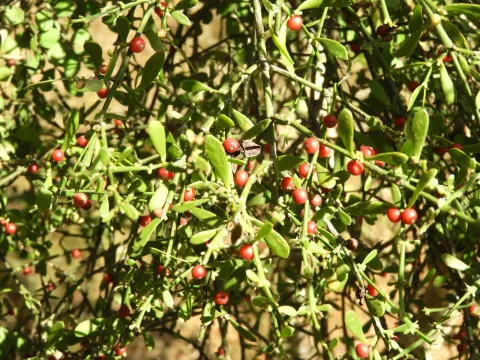
Phthirusa
Phthirusa
Phthirusa is a genus of hemiparasitic plants belonging to the family Loranthaceae. These plants are typical epiphytic parasites that attach themselves to the branches of host trees to extract water and essential mineral nutrients directly from the host's vascular system.
What the section contains


Phthirusa
The natural distribution of the genus encompasses the tropical and subtropical regions of Central and South America. They are commonly found in a wide range of ecosystems, from dense tropical rainforests to more open woodland areas, where they secure their position within the tree canopy.
Biologically, Phthirusa is a highly specialized organism that utilizes specific attachment structures called haustoria. These structures penetrate the xylem of the host plant, allowing the parasite to drain water and dissolved salts, although the plant remains photosynthetic, classifying it as a hemiparasite.
Climatic requirements are dictated by their tropical origin. They thrive in environments with high humidity and stable temperatures throughout the year. The plant is extremely sensitive to frost, which limits its biological range exclusively to warm, non-temperate climate zones.
Soil requirements for this genus are largely irrelevant as the plant does not derive nutrition from the ground through a root system. Instead, the presence of suitable host trees is critical, as they provide the structural support and sufficient exposure to sunlight required for the plant's metabolic functions.