
Passovia
Passovia
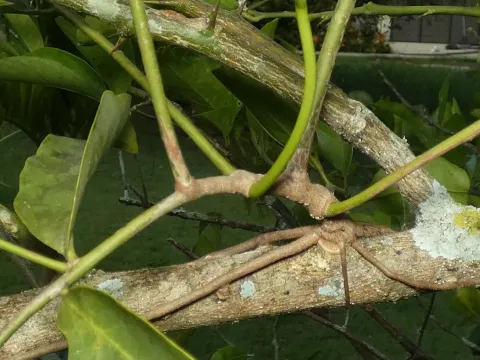
Passovia is a genus of hemiparasitic plants belonging to the Loranthaceae family, known for its unique lifestyle within tropical ecosystems.
What the section contains

Passovia
The reproduction cycle depends on avian vectors that consume the fruits and distribute seeds onto the branches of suitable host trees.
Unlike conventional crops, this plant lacks a soil-based root system and relies on sticky seeds that adhere to bark for initial germination.
Successful establishment requires the formation of haustoria, which are specialized organs used to penetrate the xylem of the host plant.
Growth phases are tightly regulated by seasonal rainfall patterns, which ensure sufficient hydration for the development of new stems and leaves.
The primary requirement for survival is the presence of a compatible host tree that can provide water and essential dissolved minerals.
Passovia thrives in humid tropical and subtropical climates where stable temperatures promote consistent biological activity throughout the year.
High relative humidity is essential because the plant lacks direct contact with ground water and depends on atmospheric moisture and host supply.
Optimal light exposure in the upper canopy is crucial for the plant to maximize its photosynthetic potential despite its parasitic nature.
The chemical composition of the host tree bark plays a significant role in successful colonization, as some species exhibit natural resistance.
The culture faces pressure from specialized insect herbivores that thrive on the tissues of hemiparasitic plants in tropical regions.
Fungal infections, often exacerbated by high humidity and poor ventilation within the canopy, can damage the haustorial attachment points.
Anthropogenic activities, such as forest clearing or tree pruning, pose a severe threat to the long-term survival of local populations.
The defense mechanisms of host trees, such as the production of biochemical inhibitors, often limit the expansion of the parasite.
Competition with other epiphyte species for space and light can lead to resource depletion and the eventual death of the affected plant.