
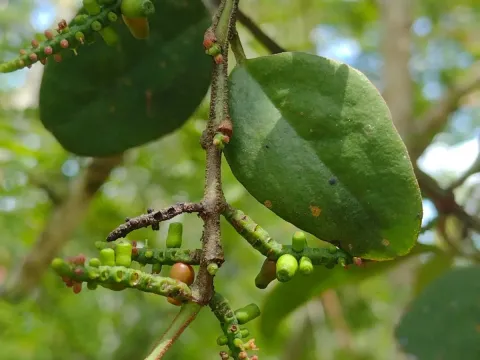
Oryctanthus
Oryctanthus
Oryctanthus is a genus of hemiparasitic plants belonging to the family Loranthaceae. These plants are specialized epiphytes that colonize the branches of host trees, extracting essential water and minerals through specialized attachment organs known as haustoria, which penetrate the host's vascular tissues.
What the section contains


Oryctanthus
The natural range of the genus encompasses the tropical regions of Central and South America. They thrive in humid forest environments, where consistent rainfall and high atmospheric humidity provide the necessary conditions for their metabolic processes and successful reproduction throughout the year.
Botanically, Oryctanthus is characterized by opposite leaves and distinctive spike-like inflorescences. Their root system is entirely modified for parasitic survival, functioning as a bridge between the parasite and the host plant's xylem, which allows them to bypass the need for independent nutrient absorption from the soil.
Climate requirements are strictly tropical, as these plants depend on warm temperatures and constant moisture to maintain their physiological functions. They are intolerant to freezing conditions and severe droughts, which can effectively halt their growth and lead to the degradation of their haustorial connections.
In terms of human use, Oryctanthus is not an agricultural crop but rather a botanical challenge. It is generally regarded as a pest in tropical horticulture and forestry because it competes with host trees for resources, which can lead to reduced vigor, lower fruit yields, and eventual dieback of infested limbs.
The primary threat posed by Oryctanthus is the depletion of the host tree's resources. By siphoning off water and nutrients, the parasite weakens the tree's overall defense mechanisms, making the host more susceptible to secondary fungal infections and damage from extreme weather events.
While Oryctanthus itself is relatively resilient to many pathogens, it can become a vector or a hub for various diseases. The sites where haustoria enter the host tree often suffer from bark fissures, which provide entry points for pathogens that cause tissue decay and rot in the host's wood.
Pests that affect Oryctanthus include specific insects and caterpillars that graze on its foliage. Although these organisms can reduce the parasite's biomass, they are rarely sufficient to eliminate the infestation entirely, and biological control remains a subject of ongoing ecological study.
Management of the species is primarily focused on mechanical removal. Pruning infested branches is the standard practice, although it must be done carefully to ensure the complete removal of the haustorial tissue embedded in the host's wood to prevent any potential for vegetative regrowth.
Dispersal is mediated by birds, which consume the berries produced by the plant and facilitate the spread of seeds across the canopy. This avian-assisted dispersal makes it difficult to manage the spread of Oryctanthus within orchards and plantations without a rigorous and consistent monitoring program.