
Loranthus elasticus
Loranthus elasticus
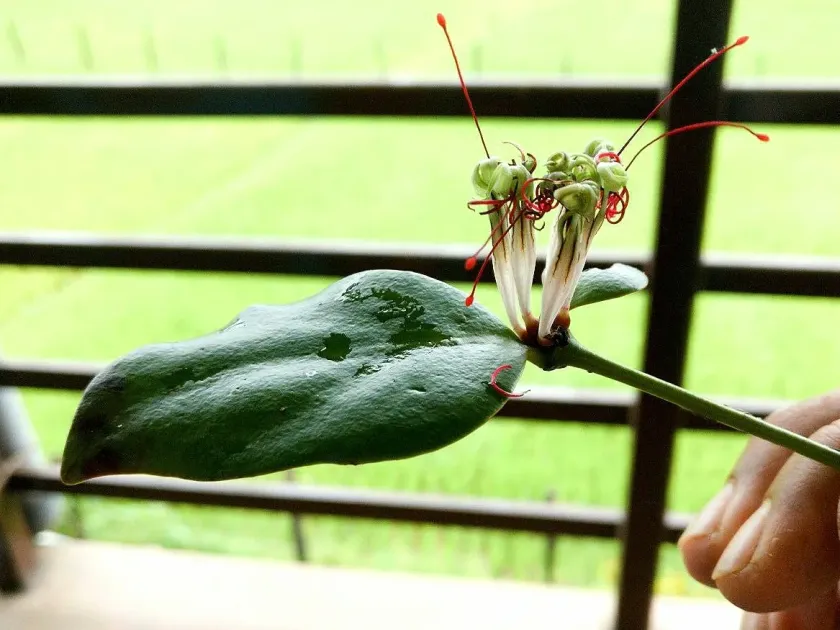
Description
Sowing dates
Loranthus elasticus is not an agricultural crop but a hemiparasitic plant that naturally colonizes the branches of tropical trees.
Propagation is entirely dependent on avian dispersal, where birds consume the fruits and deposit seeds onto suitable tree bark.
The establishment phase requires the seed to form a haustorium, which physically penetrates the host tree's tissues to extract vital nutrients.
There are no sowing schedules or traditional agricultural practices for this plant as its life cycle is fully integrated with the host tree's biology.
In research environments, attempts to propagate this species require specific grafting techniques onto host branches that mimic natural infection.
Growing requirements
This species thrives in humid tropical forest environments characterized by high levels of air moisture and consistent temperatures.
Exposure to direct sunlight is essential for growth, leading the plant to establish itself primarily in the upper canopy of the host trees.
Stable climate conditions are critical, as the plant lacks the resilience to survive significant fluctuations in humidity or cold snaps.
As a parasite, its soil requirements are negligible, as it derives its entire water and mineral supply directly from the host's xylem and phloem.
The health and physiological status of the host tree determine the overall vigor and reproductive success of the Loranthus population.
Main diseases and pests
Deforestation and the loss of mature, high-canopy trees constitute the most significant threat to the survival of this species.
Climatic stressors, particularly extended droughts that weaken host trees, directly impact the stability of the parasitic connection.
Fungal pathogens targeting the bark and tissues at the attachment site can cause the parasitic plant to detach or die prematurely.
The decline in avian populations that act as seed vectors limits the ability of the plant to colonize new host trees.
Human-induced environmental changes, such as forest fragmentation, disrupt the delicate balance between the parasite and its host ecosystem.