
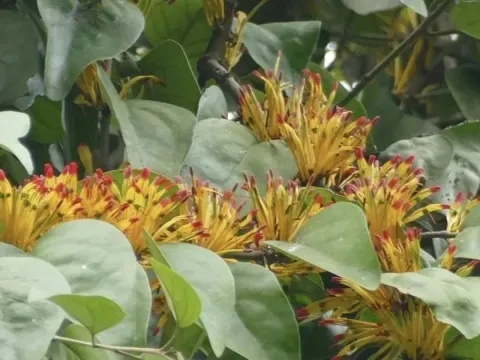
Phragmanthera
Phragmanthera
Phragmanthera is a genus of hemiparasitic plants within the Loranthaceae family. Distributed primarily across Africa, these plants are known for their parasitic relationship with a wide variety of woody host trees, which they utilize for water and nutrient uptake.
What the section contains

Phragmanthera
Botanically, Phragmanthera species are characterized by their ability to attach to branches using a specialized structure called a haustorium. This organ penetrates the bark of the host tree to connect directly with the xylem, enabling the parasite to siphon off water and mineral nutrients.
Although these plants perform photosynthesis and can produce their own carbon compounds, they remain dependent on the host for water balance. This reliance is particularly critical during dry spells, allowing Phragmanthera to maintain metabolic activities in environments where water is scarce.
The ecological requirements for Phragmanthera are tied to the presence of susceptible hosts and specific climatic conditions. High humidity levels often favor the successful germination and attachment of the seeds, which are typically dispersed by birds attracted to the plant's fruits.
There are no specific soil requirements for Phragmanthera since it completes its life cycle entirely above ground. Its development is instead governed by the physiological state of the host tree, which must be healthy enough to support the parasite’s water demands.
Phragmanthera is considered an agricultural and forestry pest due to its negative impact on host vigor. By diverting water and nutrients from the tree, it causes growth retardation, reduced fruit yields, and increased susceptibility to secondary infections or environmental stress.
The main threat caused by this parasite is the progressive decline of the host tree. Over time, heavy infestations can lead to branch death and the structural weakening of the tree, potentially resulting in the total mortality of the plant if not properly managed.
The primary control method for Phragmanthera is the systematic pruning of infected branches. This must be carried out by cutting the branch well below the site of the haustorial attachment to ensure that no parasitic tissue remains to regenerate.
Effective management includes regular monitoring of garden or orchard trees to detect early signs of infestation. Early removal of seedlings is the most cost-effective way to prevent the parasite from establishing a permanent connection with the tree's vascular system.
Chemical control remains difficult because the parasite and the host are so tightly integrated that herbicide application often carries a high risk of phytotoxicity to the host. Research is ongoing to develop safer, more targeted approaches to managing this hemiparasite.