
European mistletoe
Loranthus europaeus
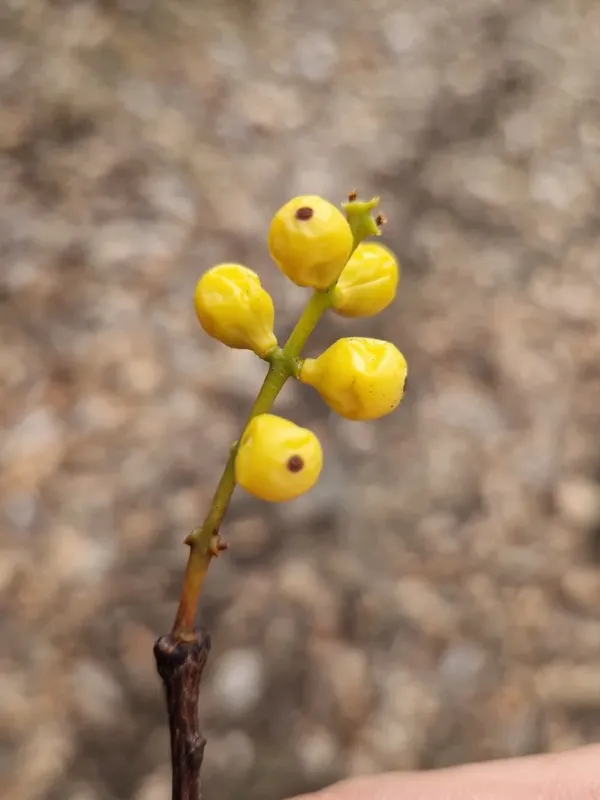
Description
Growing requirements
European mistletoe, or Loranthus europaeus, belongs to the Loranthaceae family and is recognized as a hemiparasitic shrub. Unlike common mistletoe, it specifically targets deciduous trees, primarily oaks, to derive its nutrients and moisture.
The native distribution of this plant includes Central and Southern Europe as well as parts of Western Asia. It thrives in climate zones where temperatures remain mild, as its survival is heavily dependent on the duration and severity of winter cold snaps.
Biologically, it exhibits a distinct branching pattern and utilizes specialized structures called haustoria. These organs penetrate the host's bark and reach the xylem, allowing the parasite to intercept the sap stream of the tree it inhabits.
The plant requires high light intensity for optimal growth. It is rarely found in the dense, shaded understory of forests, instead preferring the canopy of mature trees where it can maximize photosynthesis during the growing season.
From an agricultural and forestry perspective, it is managed as a forest pest. While it has some historical use in traditional medicine, its presence in managed forests is generally controlled to prevent the decline and decay of valuable oak stands.
Main diseases and pests
Pathogenic fungi and wood-rotting organisms represent a significant threat to the longevity of the haustorial connection. If the host tree begins to die, the parasite inevitably perishes, forcing it to compete for the health of its host.
Natural dispersal is facilitated by birds, which consume the berries and spread the adhesive seeds across the forest canopy. However, excessive herbivory by specific insect populations can occasionally limit the spread of the mistletoe within a stand.