
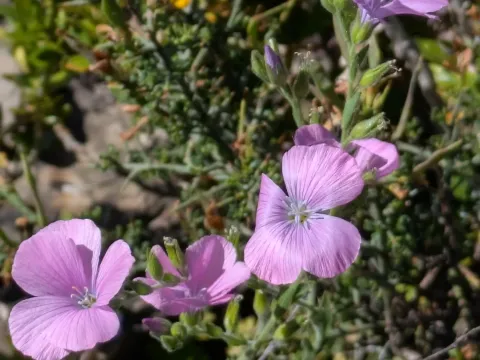
Sticky flax
Linum viscosum
Sticky flax (Linum viscosum) is a herbaceous perennial plant belonging to the Linaceae family. This species is distinguished by its unique adaptation to specific environmental niches, making it a sought-after subject for rock gardens.
What the section contains
Sticky flax
The origin of the species is linked to the mountainous regions of Central and Southern Europe. It naturally thrives in open, rocky habitats where the soil is porous and nutrient-poor, allowing it to outcompete other less hardy species.
Its botanical defining feature is the glandular, sticky pubescence found on the stems, which serves as a protective mechanism. The plant produces delicate flowers that provide significant ornamental value during the peak summer months.
Cultivation success heavily depends on imitating its natural habitat. It requires full sunlight to bloom effectively and, most importantly, soil that provides rapid drainage to prevent water accumulation near the crown.
The plant is considered relatively low-maintenance in a garden setting. It does not demand heavy fertilization, and excessive organic matter in the soil may actually be detrimental to its long-term health and vigor.
The most significant threat to sticky flax is the development of fungal diseases caused by high humidity. Crown rot is a common issue when the plant is kept in heavy or waterlogged soils for extended periods.
Pests such as mites may colonize the foliage during prolonged dry spells. These pests cause discoloration and weaken the plant, eventually leading to stunted growth if not managed through proper irrigation.
Maintaining air circulation is essential for disease prevention. Ensuring that the plant is not overcrowded by surrounding vegetation helps keep the foliage dry and minimizes the impact of potential pathogens.
Integrated pest management strategies are recommended, focusing on maintaining plant health through proper soil drainage rather than reliance on pesticides. Healthy plants are naturally more resistant to standard garden pests.
If fungal infection is observed, the immediate removal of affected stems is recommended. Reducing ambient moisture and improving the microclimate around the plant can often halt the progression of the disease.