
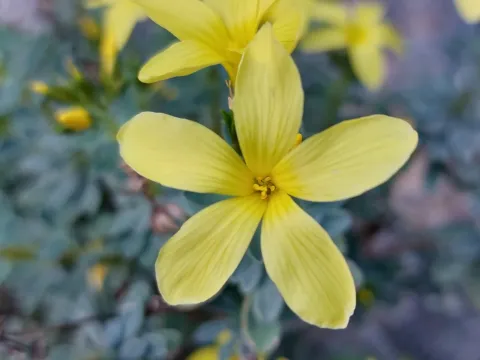
Shrubby flax
Linum arboreum
Shrubby flax (Linum arboreum) is a distinctive perennial subshrub belonging to the Linaceae family. Unlike common annual flax, this species develops woody stems, forming a rounded, durable structure over time.
What the section contains
Shrubby flax
Native to the Mediterranean basin, specifically the islands of Greece and the Aegean, it is naturally adapted to rocky and arid habitats. This evolutionary history makes it an excellent candidate for low-maintenance garden landscaping.
This plant thrives in full sunlight, requiring at least six to eight hours of direct exposure to bloom prolifically. It is highly intolerant of shade, which inevitably leads to stunted growth and loss of its characteristic compact shape.
The soil substrate must be exceptionally well-draining, mimicking the scree slopes of its origin. It prefers alkaline or neutral soil compositions, often thriving in stony, nutrient-poor media that prevent the accumulation of excess moisture.
The plant is prized for its bright yellow flowers, which emerge in spring and early summer. It is widely used in rock gardens, gravel beds, or as a decorative pot plant, provided it is protected from severe winter frosts.
The primary threat to Shrubby flax is root rot, which occurs when the plant is exposed to excessive soil moisture or poor drainage. In heavy clay soils, the roots lack necessary oxygen and succumb quickly to fungal decay.
Pests such as aphids can occasionally infest the young, tender growth during the early season. While not typically lethal, heavy infestations can weaken the plant and reduce its aesthetic appeal during the peak flowering time.
Fungal diseases like powdery mildew may appear if there is poor air circulation around the canopy. Keeping the base of the plant clear of debris and ensuring good spacing between specimens helps mitigate this issue.
Winter dampness is another significant hazard; therefore, protecting the root crown from cold, wet winter weather is essential for long-term survival in cooler climates. A layer of grit around the base can help keep the foliage dry.
Chlorosis is a potential issue if the soil pH becomes too acidic. Monitoring the nutrient balance and ensuring a alkaline environment is key to keeping the foliage a vibrant, healthy green throughout the year.