
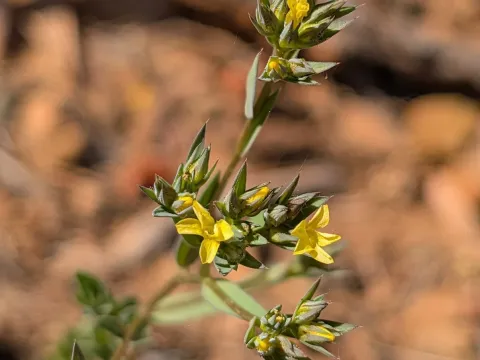
Upright yellow flax
Linum strictum
Upright yellow flax (Linum strictum) is a herbaceous plant belonging to the Linaceae family. It is recognized as an annual species, specialized in colonizing arid, nutrient-poor environments, where it demonstrates remarkable resilience to drought and heat.
What the section contains
Upright yellow flax
The native distribution area of this species spans the Mediterranean basin, parts of Southern Europe, and North Africa. It is typically found in habitats such as rocky slopes, dry grasslands, and limestone-based soils, where competition from more robust vegetation is minimal.
Regarding cultivation requirements, the species strictly demands well-drained soil conditions. Excessive moisture leads to root zone failure, making it unsuitable for heavy, waterlogged clay soils. It thrives in open, high-light environments, which are essential for successful photosynthesis and seed production.
Botanically, the plant is characterized by its stiff, erect stems and narrow, linear leaves. Unlike the common blue-flowered flax, this species displays distinctive yellow flowers, which serve as a primary diagnostic feature for identification in the field during the flowering period.
In terms of agricultural and ecological use, Linum strictum serves primarily as a stabilizer in fragile dryland ecosystems. While it lacks the economic prominence of industrial fiber flax, its ability to persist in harsh climates makes it an interesting subject for ecological restoration and range management studies.