
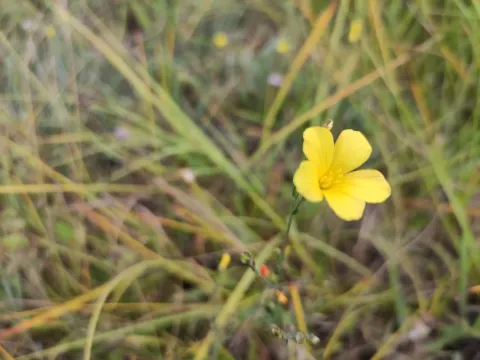
Sea flax
Linum maritimum
Sea flax, or Linum maritimum, is a perennial herbaceous plant belonging to the Linaceae family. It is distinct from the common flax species due to its specific ecological adaptations to coastal environments.
What the section contains
Sea flax
Sowing should take place in early spring once the risk of severe frost has passed and the soil has sufficiently warmed. Optimal seed germination occurs at temperatures between 10 and 15 degrees Celsius.
The seeds are small, requiring a shallow sowing depth of approximately 1 centimeter to ensure they receive enough light to trigger the germination process. Proper soil moisture must be maintained during the first two weeks.
Row spacing is typically set at 25–30 centimeters to ensure adequate space for the plant to develop its root system. Mechanical sowing techniques are preferred to ensure uniform distribution and germination depth.
In the first year of life, sea flax invests significantly in its underground parts. Gardeners or agronomists should be patient, as the above-ground growth may appear slower compared to annual flax varieties.
This species thrives in well-drained, sandy or loamy soils with a neutral or slightly alkaline pH. It is uniquely adapted to saline soil conditions, which allows it to colonize areas where other plants fail.
Full sun exposure is a critical requirement for sea flax. It needs at least 6 to 8 hours of direct sunlight per day to maintain its structural integrity and produce the characteristic vibrant flowers.
While the plant is somewhat drought-tolerant once established, supplemental irrigation is recommended during prolonged dry spells in the early stages of growth to encourage deep root penetration.
Temperature tolerance is moderate; however, in regions with harsh winters, a protective layer of mulch can help shield the root crowns from freezing and thawing cycles that might damage the plant.
Nutrient requirements are relatively low compared to commercial annual crops. Excessive fertilization, particularly with nitrogen, can lead to weak stems and a higher susceptibility to wind lodging.
Fungal diseases, specifically Fusarium wilt, represent a significant threat to sea flax health. Ensuring good air circulation and avoiding waterlogged soil are the best preventative measures against this pathogen.
Pests such as flax beetles can cause severe defoliation of young plants. Monitoring for early signs of damage is essential, and targeted insecticide application should be used if thresholds are exceeded.
Rust diseases are also observed in environments with high humidity and poor ventilation. Pruning and removing infected plant tissue can help prevent the spores from spreading to healthy stems.
Weed management is a vital component of the agrotechnical process. Weeds compete for nutrients and light, and they often harbor various insect pests that transmit diseases to the flax plants.
Crop rotation remains the most effective long-term strategy for disease suppression. Integrating non-related plant families into the rotation cycle helps break the disease life cycle and maintains soil health.