
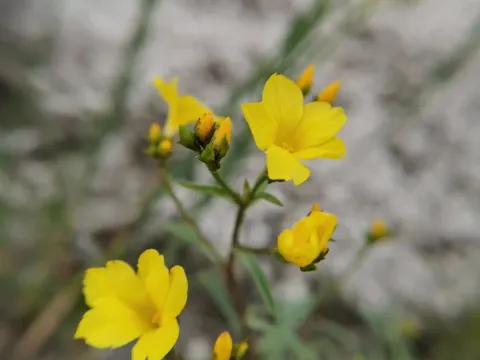
Ukrainian flax
Linum ucranicum
Ukrainian flax (Linum ucranicum) is a herbaceous perennial plant belonging to the Linaceae family. As a steppe-adapted species, it is a subject of both scientific interest and niche agricultural development.
What the section contains
Ukrainian flax
The optimal sowing time for this crop is early spring, once soil temperatures reach 5–8 degrees Celsius. Placing seeds into moist soil is essential to ensure uniform and rapid germination.
Row sowing is the preferred method, with inter-row spacing typically maintained at 15–20 centimeters. A sowing depth of 2–3 centimeters ensures that seeds remain in a stable moisture environment during the critical initial growth phase.
Post-sowing light rolling of the soil surface is recommended. This practice improves capillary water movement to the seeds, which significantly boosts emergence rates in the arid conditions typical for this species.
When cultivating Ukrainian flax, field hygiene is paramount. As seedlings are relatively slow to establish, managing weed competition during the first few weeks is crucial for the success of the stand.
This crop is strictly heliophilic and requires open, sunny locations. Any shading from weeds or neighboring crops will adversely affect the plant's structural integrity and overall seed production.
It prefers calcareous, sandy, or stony soils that offer excellent drainage. Poorly drained soils or waterlogging are lethal to this plant, as they frequently trigger root rot and rapid senescence.
Being an endemic steppe plant, it is highly drought-tolerant. It is biologically optimized to complete its vegetative and reproductive cycles before the peak heat and drought of the summer season occur.
The ideal temperature range for growth is between 18 and 25 degrees Celsius. The species is well-adapted to petrophytic environments and shows a positive growth response in carbonate-rich soil substrates.
Fertilization should be handled with caution; excessive nitrogen application can cause lodging and decrease plant quality. Balanced phosphorus and potassium fertilizers in moderate amounts are the best approach.
Fungal diseases, particularly fusarium wilt and rust, represent the most significant threat to the crop. These pathogens thrive in high-humidity conditions and spread rapidly if crop rotation is neglected.
Flax fleas (beetles) are the primary pest for seedlings. They feed on emerging leaves and can devastate a stand in a short period, necessitating preventative insecticide applications if pressure is high.
Weevils can also cause significant damage during the budding stage by feeding on floral structures. This leads to a reduction in the number of seed capsules and lowers the total harvest yield.
Nematodes, which inhabit the soil, can infest the root system and cause stunted growth. As chemical control for nematodes is difficult, spatial isolation and rigorous rotation are the most effective strategies.
Maintaining high sanitary standards, such as using treated seeds and removing potential weed reservoirs, is essential to minimize the impact of biotic stressors on the flax field.
Harvesting is performed when the plants reach full maturity, indicated by the seed capsules turning a brown or yellowish color. Delaying the harvest leads to significant seed loss due to natural shedding.
Direct combining is common, but windrowing can be used if the plants show uneven ripening. Windrowing allows for a more uniform drying process before the final threshing phase.
Post-harvest, seeds must be cleaned and dried to a moisture content of no more than 12–13 percent. Proper drying is critical to prevent the loss of seed viability and to ensure safe storage.
Storage facilities must be dry, well-ventilated, and protected against pests and rodents. Regular monitoring of the stored seed mass is necessary to avoid spontaneous heating or fungal contamination.
While primarily grown for seeds, Ukrainian flax is also prized for its aesthetic appeal. If harvested for floristic use, care must be taken to maintain the integrity of the stems and capsules.