
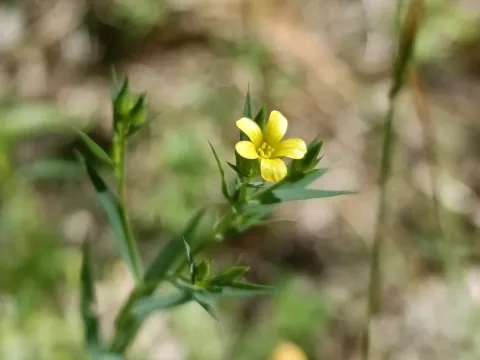
Three-styled flax
Linum trigynum
Three-styled flax (Linum trigynum) belongs to the Linaceae family and is recognized for its distinct floral structure featuring three styles. This plant is a unique species within the genus Linum, often found in specific ecological niches across steppe and meadow-steppe regions.
What the section contains
Three-styled flax
The optimal sowing time for this crop is early spring, once the soil has warmed up to at least 5–7 degrees Celsius. Early planting is crucial as it allows the crop to utilize the residual moisture from the winter season, which is vital for achieving uniform seedling emergence.
Seeding depth should be maintained between 2 and 3 centimeters. Proper depth control prevents seed desiccation at the surface and ensures that seedlings emerge with enough energy to establish a robust root system before the onset of potential summer drought periods.
Sowing density is a critical agronomic factor for this species. Excessive seeding rates lead to competition for nutrients and light, which reduces the overall yield and structural integrity of the stems, making the plants more susceptible to lodging during heavy rains.
Mechanical preparation of the seedbed is essential for successful cultivation. The soil should be fine-textured, flat, and free of large clods to ensure good soil-to-seed contact, which promotes rapid germination and establishment of the seedlings in the field environment.
Three-styled flax requires high levels of solar radiation to develop properly. Fields should be situated in open areas without shading from trees or buildings, as even partial shade can significantly reduce the biomass production and seed quality of the crop.
The ideal soil profile consists of well-drained chernozem or chestnut soils with a neutral pH. The species is sensitive to waterlogging; therefore, effective drainage is necessary to prevent root rot and other moisture-related diseases that can devastate the crop during the early growth stages.
Nutrient management focuses on balanced fertilization, particularly with phosphorus and potassium, which support reproductive development. Over-fertilization with nitrogen should be avoided, as it can cause excessive vegetative growth and decrease the crop's resistance to environmental stress.
Water management is particularly important during the flowering phase. Adequate moisture during this window ensures proper fertilization and high seed set, which are the primary drivers of yield in this crop species. Supplemental irrigation might be necessary in arid regions.
Weed control is perhaps the most significant labor-intensive activity for this crop. Because the seedlings develop slowly, they are poor competitors against aggressive weeds. Regular mechanical weeding or selective herbicide application is necessary to keep the fields clean.
Fungal diseases are the primary threat to three-styled flax, particularly Fusarium wilt. This pathogen can persist in the soil for years, making long-term crop rotation essential for managing the disease pressure in fields where the crop is grown regularly.
Flax beetles are a significant pest that can decimate a young stand by feeding on the tender cotyledons and the growing point. Early intervention with appropriate insecticide treatment is often required if the pest population exceeds the established economic damage threshold.
Rust, caused by various fungal pathogens, can lead to severe damage to the plant's photosynthetic capacity. Using certified, rust-resistant seed varieties and timely application of systemic fungicides are the best practices for minimizing losses caused by this disease.
Aphids and other sucking insects may also infest the crop, damaging the stem tissue and transmitting viral diseases. Integrated pest management strategies should be employed, focusing on monitoring and using biological controls where possible to keep pest numbers low.
Consistent monitoring of the field throughout the growing season is the key to maintaining crop health. By detecting threats at the first sign of symptoms, farmers can take prompt actions that protect the yield potential and ensure a high-quality final harvest.