
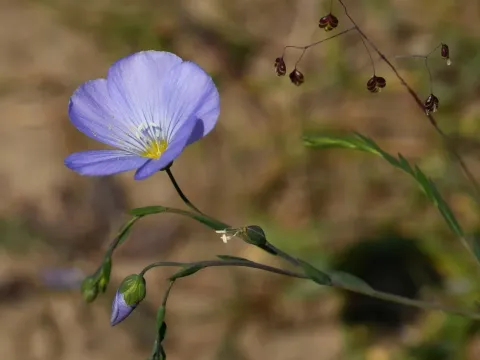
Perennial flax
Linum anglicum
Perennial flax (Linum anglicum) is a member of the Linaceae family, known for its elegant sky-blue flowers and slender stems. It is a hardy herbaceous plant that thrives in various temperate environments.
What the section contains
Perennial flax
Seeds are typically sown in early spring as soon as the soil can be worked. Autumn sowing is also possible in regions with mild winters, allowing for natural stratification of the seeds.
The seeds should be sown shallowly, about 1 cm deep, in a well-prepared seedbed. Proper soil-to-seed contact is essential to ensure uniform and successful germination.
For ornamental or research purposes, spacing should be approximately 20–30 cm between individual plants. This spacing prevents overcrowding and allows for optimal air circulation.
Germination usually takes about two weeks depending on soil temperature. Adequate moisture should be maintained during the initial establishment phase to support healthy growth.
This species requires full sun exposure to flourish. Shade will lead to poor floral display and weakened stems, reducing the overall vitality of the plant population.
Soil requirements include well-drained, slightly alkaline to neutral conditions. Linum anglicum is highly sensitive to waterlogging, which can cause root rot in a very short time.
The plant is remarkably drought-tolerant once established, thanks to its deep taproot system. Supplemental irrigation is only necessary during extended heatwaves or severe dry spells.
Regarding soil fertility, perennial flax prefers moderate levels of nutrients. Over-fertilization, especially with nitrogen, should be avoided as it encourages excessive vegetative growth at the expense of flowering.
The plant demonstrates excellent winter hardiness. It can survive sub-zero temperatures and requires minimal protection in regions where the ground freezes during winter.
The primary threats to this crop include fungal pathogens, particularly Fusarium wilt. This disease can decimate entire stands by obstructing the plant's vascular tissues.
Flax beetles (fleas) are the most common insect pests, capable of damaging young foliage. Monitoring fields during the early stages of growth is crucial for early detection.
Crop rotation is the most effective cultural practice to prevent the buildup of soil-borne diseases. A rotation cycle of at least 4 years is highly recommended for flax-growing areas.
Integrated pest management, including the use of selective insecticides and healthy site selection, helps maintain the health of the perennial flax stands.
Good cultural hygiene, such as removing debris and preventing dense weed competition, significantly reduces the environmental stress that makes plants susceptible to pathogens.