
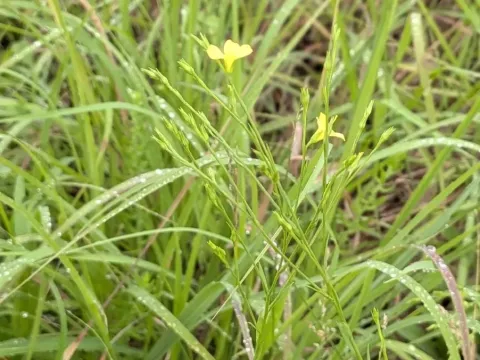
Grooved flax
Linum sulcatum
Grooved flax (Linum sulcatum) is a member of the Linaceae family. This annual herbaceous plant is native to the prairies of North America, where it thrives in open, sun-exposed habitats.
What the section contains
Grooved flax
The sowing season begins in early spring once the danger of hard frosts has passed. Seeds require a well-prepared, fine-textured seedbed to ensure optimal germination rates across the field.
Seeding depth is a critical factor for success. Seeds should be placed at a shallow depth of approximately 1 to 2 centimeters to ensure that the emerging seedlings can successfully reach the surface.
Row spacing should be managed to balance plant density and airflow. Maintaining adequate space between rows helps prevent the accumulation of moisture around the base of the stems, reducing disease risks.
Uniformity in sowing is achieved through modern equipment, ensuring that seed density is consistent throughout the field area, which minimizes competition between individual flax plants.
This species is highly adapted to full sun conditions. It does not perform well in shaded areas, as low light levels lead to etiolation and a significant reduction in overall plant vigor.
Well-drained soil is essential for the health of grooved flax. The species is sensitive to waterlogging, so soils with high clay content that retain excess water should be avoided or amended.
The plant demonstrates good tolerance to moderate drought, typical of its native prairie environment. However, supplemental irrigation may be beneficial during prolonged dry spells at the flowering stage.
Soil pH levels should ideally be near neutral. The crop performs best on sandy loam soils that offer both aeration and the ability to hold essential moisture during peak growth cycles.
Temperature requirements are moderate. While the plant is hardy, extremes in temperature coupled with high humidity can stress the crop and increase susceptibility to environmental disorders.
Common diseases affecting this crop include Fusarium wilt and various leaf rusts. These pathogens are most prevalent under high-humidity conditions and can severely impact crop yield.
Pest pressures primarily include flax flea beetles, which can devastate early-stage seedlings. Other pests, such as cutworms and grasshoppers, may also feed on the foliage during the season.
Disease management strategies emphasize the importance of crop rotation and the use of certified, disease-free seed. Preventing the buildup of soil-borne pathogens is key to long-term productivity.
Integrated pest management (IPM) is recommended to control insect populations. This includes monitoring field edges and applying interventions only when economic threshold levels are reached.
Weed control is vital during the establishment phase, as the plants are not highly competitive against vigorous weeds. Mechanical cultivation or selective herbicides are standard options for weed suppression.