
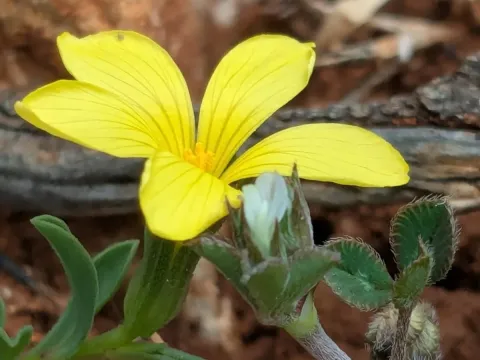
Knotted flax
Linum nodiflorum
Knotted flax (Linum nodiflorum) is a herbaceous annual plant belonging to the Linaceae family. This species is distinguished by its unique morphological structure, featuring thickened nodes along its stems, which differentiates it from the common cultivated flax varieties found in large-scale agriculture.
What the section contains
Knotted flax
The plant originates from the Mediterranean region and parts of Southeast Europe. In its native habitat, it typically thrives in well-drained, sunny environments, often appearing on stony hillsides and dry meadows where sunlight is abundant and competition from taller vegetation is limited.
For successful growth, this culture requires light, well-aerated soils with excellent drainage capabilities. It is highly sensitive to waterlogging, as saturated soil conditions quickly lead to root decay and can cause significant stand losses during the early stages of vegetation.
In terms of climate, Linum nodiflorum is a heliophilic species that prefers warm, stable temperatures. It is well-adapted to Mediterranean-type climates, characterized by dry, sunny summers. Proper solar exposure is critical for the plant to complete its life cycle and produce healthy seeds.
Agrotechnical management requires precise soil preparation to ensure a fine seedbed. Given the small size of the seeds, planting depth must be kept shallow—ideally between 1 and 2 centimeters—to ensure that seedlings can emerge efficiently through the soil surface without depleting their energy reserves.
The primary pathological threats include fungal infections such as Fusarium wilt and various root rots, which often emerge when soil moisture levels are too high. Crop rotation is the most effective preventative strategy, ensuring the field has adequate time to recover before another cycle of Linaceae.
Insect pests, such as the flax flea beetle, represent a significant risk during the seedling emergence phase. These pests can rapidly damage cotyledons and early leaves, severely setting back plant development. Integrating seed treatments and systematic scouting is essential to maintaining healthy crop stands.