
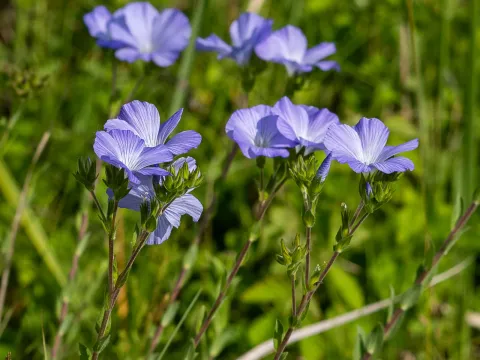
Hirsute flax
Linum hirsutum
Hirsute flax (Linum hirsutum) is a perennial herbaceous plant belonging to the Linaceae family. In its natural habitat, the plant propagates through seeds that are released from capsules in late summer, with germination occurring under favorable conditions the following spring.
What the section contains
Hirsute flax
For cultivation purposes, autumn sowing is highly recommended. This method allows the seeds to undergo natural winter stratification in the ground, which is essential for breaking dormancy and ensuring uniform germination as temperatures rise in the spring.
If spring sowing is preferred, the seeds must be artificially stratified. Placing the seeds in a moist substrate in a refrigerator at temperatures between +2 and +5 degrees Celsius for several weeks will significantly improve the success rate of sprouting.
Seeds should be sown in rows at a shallow depth of approximately 1–2 centimeters. Given their small size, covering them too deeply can prevent the seedlings from reaching the surface, so precise control over planting depth is crucial for healthy stands.
A row spacing of 20–25 centimeters provides adequate room for the root systems to develop while allowing sufficient airflow between plants. Maintaining clean, weed-free rows during the first few weeks is vital, as the young flax plants are not initially competitive.
This species requires full sun exposure to thrive and produce its signature blossoms. It is not adapted to shaded environments, and insufficient sunlight will cause the stems to become etiolated and collapse, leading to a significant reduction in plant vitality.
Hirsute flax performs best in loose, well-drained soils that are rich in mineral content. While it can adapt to various soil types, it strongly dislikes waterlogged or heavy clay conditions, which often cause the crown and roots to rot during wet seasons.
A neutral to slightly alkaline soil pH is optimal for this plant. If the soil is excessively acidic, amendments like lime should be incorporated well in advance of planting to create a more favorable environment for the root system to absorb nutrients.
Water requirements are moderate, but consistent moisture is necessary during the early growth stages and the onset of the flowering period. Once established, the plant shows a degree of drought tolerance, though prolonged dry spells can limit flower production.
The plant is hardy and well-adapted to moderate temperate climates. It tolerates winter conditions effectively, provided that the soil drainage is adequate to prevent ice formation around the base of the plant during freeze-thaw cycles.
Fusarium wilt is a common fungal threat to various flax species, including Hirsute flax. This soil-borne pathogen attacks the vascular system, preventing the upward transport of water and nutrients, which leads to rapid yellowing and eventual death of the plant.
Anthracnose and rust can occur in humid environments where air circulation is poor. These diseases manifest as spotting on the leaves and stems, significantly weakening the plant's structural integrity and reducing the overall yield of seed capsules.
The most destructive insect pests at the seedling stage are flax flea beetles. These small insects feed on the cotyledons and early true leaves, causing severe damage that often results in total crop loss if left untreated during the critical initial growth phase.
During the flowering season, infestations of thrips and aphids may occur. These pests suck the sap from tender flower buds, causing malformation and stunted growth, which ultimately affects the quality and quantity of the seed production.
Effective management includes implementing a proper crop rotation cycle, avoiding the planting of Linaceae on the same plot for multiple consecutive years. Regular scouting for early signs of pests and fungal spots allows for targeted and timely intervention.