
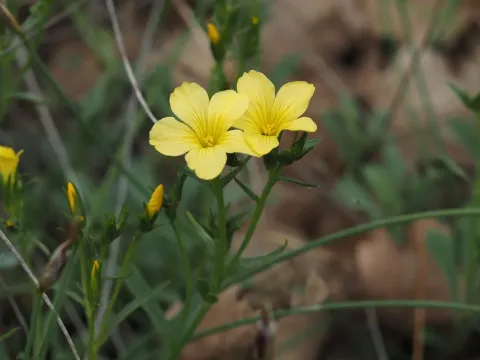
Campanulate flax
Linum campanulatum
Campanulate flax (Linum campanulatum) is a perennial herbaceous plant belonging to the Linaceae family. It is native to the Mediterranean region, typically found in rocky, calcareous habitats where drainage is excellent.
What the section contains
Campanulate flax
This species is highly valued for its striking yellow, bell-shaped flowers. It typically reaches a height of 20 to 40 centimeters, forming dense, multi-stemmed clusters that make it an excellent choice for rock gardens and borders.
The plant thrives in full sun. It requires a location with maximum daily sunlight exposure to ensure robust stems and optimal flower production throughout the blooming period, which usually occurs in early to mid-summer.
Regarding soil, it prefers sandy or gritty substrates with a neutral to slightly alkaline reaction. It is extremely intolerant of waterlogging, making proper soil drainage the most critical factor for its successful cultivation.
Campanulate flax exhibits moderate frost hardiness. While it can withstand cold temperatures, it performs best in regions where winters are not excessively wet, as stagnant moisture around the crown can be fatal.
Propagation is most commonly achieved through seeds. Sowing should take place in early spring once the threat of severe frost has passed and the soil has sufficiently warmed up to promote germination.
Seeds benefit significantly from a period of cold stratification before sowing. This naturalistic simulation helps break dormancy and ensures a more uniform emergence of seedlings across the planting site.
When sowing in the field, space seeds approximately 20 to 25 centimeters apart. The seeds should be covered with only a very thin layer of soil or sand, as light can be beneficial for the germination process of this species.
If started in a greenhouse, seedlings should be maintained in well-drained pots until they establish a strong root system. Proper airflow in the nursery environment is essential to prevent the development of damping-off disease.
Young plants are sensitive to root disturbance. When transplanting into their permanent position, care must be taken to keep the root ball intact to reduce transplant shock and promote faster establishment.
Root rot is the most common threat to Campanulate flax. It is almost exclusively caused by excessive soil moisture and poor drainage, highlighting the necessity of planting on slopes or in prepared gritty beds.
Flax beetles can occasionally cause damage to the foliage, especially in young plants. Integrated pest management, including the use of targeted insecticides, may be necessary if infestations threaten the structural integrity of the plant.
Fungal diseases like powdery mildew may occur in poorly ventilated areas or during humid weather. Maintaining adequate spacing between plants is the most effective cultural method to prevent the spread of spores.
To keep the plants vigorous and resistant to stress, a light application of a balanced, low-nitrogen fertilizer can be applied in early spring. Avoid excessive fertilization, which can cause soft, rapid growth susceptible to disease.
Regular monitoring of the planting site is essential. Removing any dead or yellowing foliage throughout the growing season helps to reduce the accumulation of debris that could harbor pests or pathogens.
While primarily an ornamental plant, seed harvesting is possible for propagation purposes. Seeds are ready for collection once the seed capsules have turned brown and dried thoroughly on the stem.
The capsules should be harvested during dry weather to prevent moisture from compromising the seed quality. After collection, they should be cleaned and stored in a cool, dark, and dry environment.
For those interested in cut flowers, stems can be harvested when the first bells are beginning to open. Use sharp shears and place stems immediately into clean water to maximize vase life.
Cutting back the flowering stems after the primary bloom cycle can encourage the plant to produce a secondary flush of growth, potentially extending the decorative period of the garden bed.
Proper harvest and post-harvest handling of plant materials contribute to the longevity of the plant. Ensuring the plant is not overly pruned just before winter dormancy is also recommended to maintain overall plant health.