
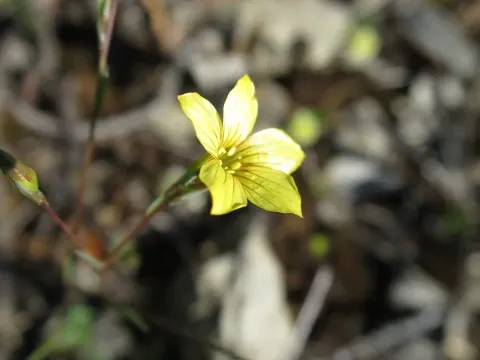
Bristly flax
Linum setaceum
Bristly flax (Linum setaceum) is a wild species belonging to the Linaceae family. It is distinct from the common flax cultivated for fiber or oil, appearing as a specialized plant adapted to harsh, Mediterranean-like environments.
What the section contains
Bristly flax
The origin of this species is tied to Southern Europe and the Mediterranean basin. It typically inhabits rocky slopes, limestone outcroppings, and dry grasslands, which define its ecological preferences for high light exposure and well-drained substrates.
Botanically, Linum setaceum is identified by its slender, bristles-covered stems. Its leaves are narrow and linear, an adaptation designed to minimize water loss through transpiration, which is essential for survival in its arid natural range.
Requirements for growth include low nutrient levels and excellent soil aeration. This plant thrives in poor soils where other competitive species fail. It is strictly a xerophytic plant, requiring no irrigation once established.
Agricultural use for this species is non-existent in commercial farming. Its value lies exclusively in genetic research and botanical study, serving as a potential donor of drought-resistance genes for industrial flax improvement.
The primary threats to Linum setaceum are fungal pathogens such as Fusarium wilt and rust, which become prevalent if the soil drainage is inadequate. Waterlogging is the most critical factor that leads to rapid plant death.
Insect pests, specifically the flax flea beetle, represent a major risk during the initial stages of seedling development. These beetles can cause extensive damage to the young, delicate foliage, stunting the plant's growth.
Competition from more aggressive weeds is another limiting factor. Because the plant grows relatively slowly, it cannot compete effectively with dense grass cover for light and soil nutrients.
Disease management is minimal, but cultural practices for ex-situ conservation include careful monitoring of plant density. Preventing overcrowding is essential to ensure adequate airflow around the stems.
Overall, maintaining the natural balance of its habitat is the best way to prevent outbreaks of diseases or pest infestations. Chemical intervention is rarely considered due to the plant's sensitive nature and lack of commercial scale.