
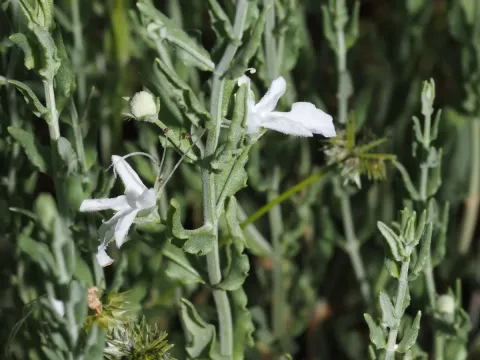
Wall germander
Teucrium racemosum
Sowing of Teucrium racemosum should begin in the spring once the soil temperature consistently reaches 10-12 degrees Celsius. The seeds often benefit from a stratification period of several weeks to ensure uniform germination.
What the section contains
Wall germander
Seeds are small and should be sown at a depth of approximately 0.5 to 1 centimeter. Proper seed-to-soil contact is essential for successful establishment, so light rolling after seeding is recommended.
When starting in a greenhouse, sowing in trays 8 weeks before the last frost allows for a stronger root system. Transplanting is performed once the danger of freezing temperatures has fully passed.
Optimal spacing is crucial to prevent competition for resources. Planting at a distance of 30 cm between plants and 40 cm between rows allows for efficient mechanical weeding and adequate aeration.
Establishment is slow during the first phase of growth. Keeping the seedbed weed-free during this period is mandatory to prevent the crop from being choked out by faster-growing competitive weeds.
Wall germander is a member of the Lamiaceae family and is recognized for its xerophytic characteristics. It thrives in full sun, requiring at least 6-8 hours of direct exposure to sunlight daily.
The ideal soil is sandy, well-draining, and slightly alkaline. It performs poorly in heavy, clay-based soils where moisture retention is high, as this often leads to root rot issues.
The plant is highly drought-tolerant once established, making it suitable for regions with limited rainfall. It requires deep, infrequent watering rather than light, frequent irrigation to encourage root depth.
Temperatures between 20 and 28 degrees Celsius are ideal for active growth. It possesses moderate winter hardiness, though protection may be necessary in colder climates to prevent die-back.
Nutrient requirements are relatively low. Excessive nitrogen application should be avoided as it stimulates leafy growth at the expense of essential oil production, which is a key economic trait of the crop.
The harvestable product is the aerial part of the plant, rich in bioactive compounds. Harvesting is performed at the peak of flowering when the aromatic profile is most concentrated.
Yield capacity matures by the third year of production. Farmers can expect to harvest one or two cuts per season, depending on the irrigation regime and the specific climatic conditions of the year.
Post-harvest management is critical; drying must occur in a dark, well-ventilated space at temperatures not exceeding 40 degrees Celsius to preserve the delicate essential oils.
Plantations are perennial and can remain productive for up to 7-10 years if managed correctly. After this period, plant density usually declines, and replanting is necessary.
Quality assurance focuses on purity. Minimizing foreign matter, such as stones or weeds, is essential to meet the pharmaceutical and herbal industry standards for dried plant materials.
Root rot is the most significant threat to the cultivation of Teucrium racemosum. It is primarily caused by poor drainage and excessive watering, necessitating strict water management protocols.
Pest pressures include various leaf-feeding insects and spider mites, which can become problematic during hot, dry summer spells. Early detection via regular field scouting is highly effective.
- Rhizoctonia and Fusarium root rots.
- Powdery mildew under high humidity conditions.
- Spider mites (Tetranychidae) causing leaf stippling.
- Leaf-rolling caterpillars damaging terminal buds.
Biological pest control agents are preferred over chemical pesticides to maintain the crop’s organic certification and medicinal quality. Integrated Pest Management (IPM) is the recommended approach.
Rotation cycles are essential to break disease life cycles. Planting Teucrium on the same land should be avoided for at least 5 years to reduce the soil-borne pathogen load.
Harvesting is typically timed during the morning hours, after the dew has evaporated, to ensure the highest quality of the harvested aerial parts for drying.
Mechanical harvesting equipment should be calibrated to cut at least 5-10 cm above the ground. This preserves the base of the plant, facilitating quicker regeneration and regrowth for future cuttings.
Freshly harvested plant material should be moved to the processing facility immediately. If kept in heaps, the material may heat up, causing fermentation and loss of aromatic quality.
Transport containers must allow for airflow. High-density packing during transport is detrimental, as it promotes degradation and spoilage of the herbal raw material.
After the final harvest, fields should be cleared of debris to prepare the crop for dormancy. Maintenance of the equipment and soil health follows immediately after the season ends.