
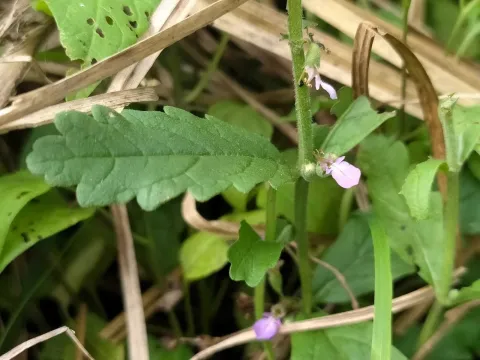
Water germander
Teucrium scordium
Water germander is traditionally propagated through seed sowing in early spring, once the soil temperature has stabilized for consistent germination.
What the section contains
Water germander
Cold stratification of seeds is highly recommended to overcome dormancy and improve the overall uniformity of the seedling stands.
Vegetative propagation via root division is also a viable method, typically carried out in the autumn to ensure establishment before winter.
The seeds should be sown at a shallow depth, covered with a thin layer of soil, and kept consistently moist throughout the establishment phase.
Row spacing should be maintained at 40-50 cm to allow for proper airflow and to facilitate easier weeding during the early growth stages.
As a member of the Lamiaceae family, Teucrium scordium thrives in moist habitats and prefers damp, fertile soils rich in organic content.
The plant requires a sunny or partially shaded position, provided that the soil moisture levels remain relatively high throughout the growing season.
It performs best in neutral to slightly alkaline soil conditions, which support healthy root development and essential oil synthesis.
While the species is hardy, it is sensitive to extreme drought and stagnant water conditions that can cause root suffocation or decay.
Adequate soil drainage is essential despite its affinity for moisture, as waterlogged conditions inhibit long-term plant health and productivity.
The harvestable yield is primarily composed of aerial parts, which are collected for their characteristic garlic-like scent and therapeutic properties.
Optimizing planting density and providing supplemental irrigation during dry periods can significantly increase biomass production per hectare.
Regular maintenance, including nutrient management, ensures a high-quality yield that meets the standards required for the herb industry.
The plant demonstrates good regenerative capacity, allowing for multiple harvests per season under favorable climate and fertilization conditions.
Sustainable harvest management, such as leaving enough vegetative mass during the cut, promotes the longevity of the perennial plantation.
The main threats to Teucrium scordium plantations involve fungal diseases that thrive in high humidity and poorly ventilated environments.
Powdery mildew is a common concern that can affect leaf quality, leading to a reduction in the concentration of valuable bioactive compounds.
Root rots are frequently associated with improper drainage management, which creates an anaerobic environment detrimental to the root system.
Insect pests like aphids can periodically infest the tender shoot tips, requiring integrated pest management strategies to protect the crop.
- Implementing crop rotation cycles to disrupt pathogen life cycles in the soil.
- Monitoring soil moisture to prevent anaerobic conditions at the root level.
- Utilizing biological control agents for safe and eco-friendly pest management.
Harvesting is typically performed during the peak flowering stage to capture the highest levels of essential oils and active plant compounds.
The stems are cut at a specific height above the ground, ensuring that the base of the plant remains intact for subsequent regrowth.
Immediate post-harvest processing is crucial, moving the biomass quickly to drying facilities to preserve the distinct aromatic qualities.
Drying should occur in a well-ventilated space, shielded from direct sunlight to prevent the degradation of heat-sensitive chemical constituents.
Proper storage in airtight, light-resistant containers ensures that the dried herb retains its potency and quality for market distribution.