
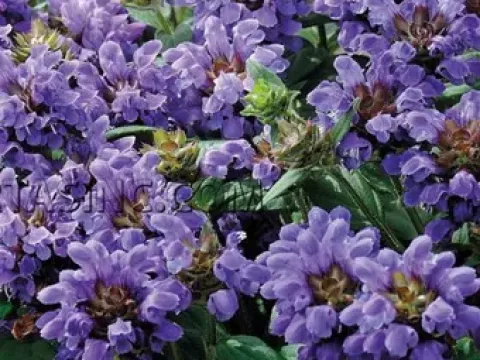
Webb's self-heal
Prunella webbiana
Webb's self-heal (Prunella webbiana) is a resilient member of the Lamiaceae family. It is a perennial herbaceous plant valued for its vibrant inflorescences.
What the section contains
Webb's self-heal
Propagation is typically done through seeds sown in autumn or early spring. Stratification helps to break dormancy and ensure uniform germination across the seed bed.
When starting indoors, use a well-draining seed-starting mix. Keep the seeds barely covered with soil, as they require light to germinate efficiently.
Vegetative division of established clumps is another common practice, best performed in early spring or after the plant has finished flowering in the autumn.
For optimal growth, seedlings should be spaced approximately 20 to 30 centimeters apart, allowing sufficient airflow to prevent moisture-related issues.
The plant thrives in full sun to partial shade, showing great adaptability to various light conditions depending on the local climate and temperature.
It prefers fertile, moist, and well-draining soil. While it can tolerate slightly heavy soils, stagnant water must be avoided to prevent root damage.
Regular irrigation is necessary during the early stages of establishment and in prolonged dry spells to maintain high levels of decorative biomass.
Soil pH should remain neutral to slightly acidic. Applying compost annually provides the necessary nutrients for sustained vegetative growth throughout the season.
Webb's self-heal is noted for its excellent cold hardiness, making it suitable for temperate regions without the need for intensive winter protection.
The main threats to the plant's health include powdery mildew and leaf spot diseases, which primarily manifest during periods of high humidity and poor airflow.
Management strategies involve applying appropriate fungicides and spacing plants to maximize air circulation, reducing the environmental conditions favored by fungi.
Pests such as aphids and spider mites may occasionally infest young leaves and stems, necessitating regular monitoring throughout the growing season.
Biological control methods or targeted insecticidal treatments can be employed if pest populations exceed the threshold for healthy plant development.
Maintaining a weed-free area around the base of the plant reduces competition for resources and eliminates potential hiding spots for common pests.
The flowering stalks should be harvested during the peak blooming stage when essential oils and medicinal compounds are at their highest concentration.
Drying the harvested material is best achieved in a cool, dark, and well-ventilated space to preserve the natural color and chemical integrity of the flora.
The plant serves multiple purposes, including its use as a beautiful garden perennial, a medicinal herb, and an excellent source of nectar for pollinators.
Pruning faded flowers encourages a second flush of blooms later in the season, extending the plant's ornamental appeal for landscape designers.
Properly dried material can be stored for extended periods, maintaining its utility for various applications in herbalism and ornamental horticulture.