
Puriri
Vitex lucens
The Puriri (Vitex lucens) is an evergreen tree belonging to the Lamiaceae family, native exclusively to New Zealand. It is a subtropical plant that thrives in temperate, frost-free environments and struggles in colder climates.
What the section contains
Puriri
The tree requires fertile, well-draining soil with a neutral to slightly acidic pH to reach its full potential. Wind protection is critical in the early stages of establishment, as the branches are somewhat brittle.
The growth rate of Vitex lucens is relatively slow, making long-term planning essential for any cultivation efforts. Consistent moisture and a humid climate are preferred for optimal foliage development and health.
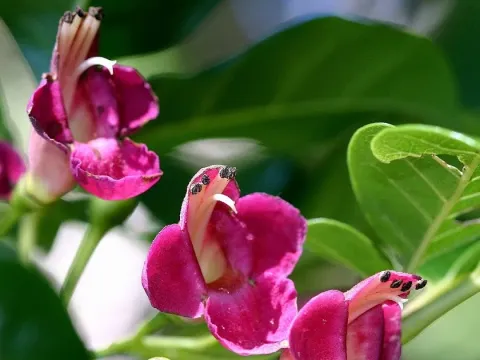
Botanically, it features large, glossy, compound leaves and pink to red flowers that produce nectar throughout the year, serving as a vital food source for avian populations. Agricultural management focuses on soil nutrient enrichment and protection from severe droughts.
The timber of the Puriri is renowned for its incredible density, durability, and resistance to decay, making it highly valued for historical construction projects. It is also an essential species for ecological restoration in its native range.
The most significant pest affecting Puriri is the Puriri moth (Aenetus virescens), whose larvae bore into the stems and trunks of young trees. Invasive mammals, particularly possums, cause severe damage by consuming leaves and bark.
Root rot caused by Phytophthora species can occur if the soil remains waterlogged for extended periods. Proper site selection and drainage management are the best preventative measures against soil-borne pathogens.
Integrated pest management is recommended to maintain the health of these trees without harming the biodiversity they support. Chemical intervention should be minimized to protect local bird populations that feed on the tree.
Routine inspection for larval entry holes on the trunk is necessary for early intervention in high-value plantings. Pruning of diseased branches should be performed during dry weather to minimize fungal spore spread.
Ongoing research is focused on genetic resistance to common pathogens, as the species is primarily managed for conservation and selective timber use within native forest management frameworks.