
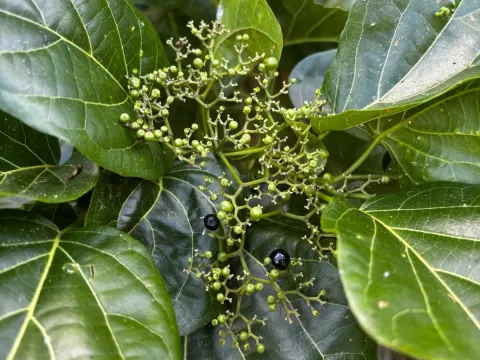
Premna
Premna
Propagation of Premna for industrial or ornamental purposes is most commonly achieved through vegetative methods, specifically cuttings. The optimal time for taking semi-hardwood cuttings is during the spring season when the plant breaks dormancy and accelerates sap flow.
What the section contains
 Premna barbata
Premna barbata
Premna barbata
 Premna cordifolia
Premna cordifolia
Premna cordifolia
 Premna microphylla
Premna microphylla
Premna microphylla
 Premna mollissima
Premna mooiensis
Premna mooiensis
Premna quadrifolia
Premna quadrifolia
Premna mollissima
Premna mollissima
Premna mooiensis
Premna mooiensis
Premna quadrifolia
Premna quadrifolia
 Premna serratifolia
Premna serratifolia
Premna serratifolia
 Premna trichostoma
Premna wightiana
Premna wightiana
Premna trichostoma
Premna trichostoma
Premna wightiana
Premna wightiana
 Wooly Premna
Premna tomentosa
Wooly Premna
Premna tomentosa
Premna
Seed propagation is less common due to specific requirements regarding germination rates, as seeds often need stratification or soaking in growth stimulants. Seeds should be sown in a light, well-draining substrate at a temperature no lower than 22-25 degrees Celsius.
A crucial factor during sowing is maintaining consistent soil moisture, although waterlogging must be avoided, as it is fatal to young seedlings. It is recommended to cover the trays with plastic or glass to create a greenhouse effect until the first shoots emerge.
Pricking out of seedlings is performed at the stage when the second pair of true leaves has formed. After this process, plants require shading for several days to prevent sun damage and ensure the root system adapts to the new growing medium.
Nitrogen-based complex fertilizers in low concentrations are used to accelerate growth. Proper soil preparation before planting in the final location must include the incorporation of organic matter to improve structure and moisture retention capabilities.
Premna belongs to the Lamiaceae family, although it was previously classified within Verbenaceae. It is a predominantly tropical and subtropical genus consisting of trees and shrubs that demand intense sunlight for optimal development.
The plant prefers well-drained, fertile loams with a neutral to slightly acidic pH. Water stagnation in the root zone is a critical factor causing root rot, which is why a robust drainage layer is essential when growing in containers or pots.
Climate requirements include consistently high temperatures without sharp fluctuations. The crop is extremely sensitive to frost, making it suitable only for greenhouses or as a container plant that must be moved indoors during winter in temperate regions.
Relative air humidity should be maintained at 60-70 percent. In dry conditions, such as indoor office or residential environments, Premna may shed leaves; therefore, regular misting of the crown is an essential element of standard plant care.
The plant tolerates structural pruning well, which has made it a popular choice in the art of bonsai. Regular trimming stimulates branching and allows for the maintenance of a compact crown shape, which is critical for intensive cultivation practices.
In economic terms, Premna is valued not for biomass volume but for the concentration of bioactive compounds in its leaves and bark. The yield of green matter depends on the frequency of trimming and the quality of lighting provided.
Harvesting raw materials for medicinal purposes is carried out during the plant's active growing season. Leaves are harvested by hand, taking care not to damage the main woody stems to avoid hindering the shrub's subsequent development.
To maximize the yield of essential oils or extracts, plants should be provided with an optimal light regime. Using supplemental lighting during winter months helps maintain the plant's metabolism, which positively affects the quality of secondary metabolites.
The economic viability of Premna cultivation is often linked to landscaping or pharmaceutical production, where the product is prized for its unique phytochemical properties used in traditional medicine across Asian countries.
When cultivated as an ornamental plant, the "yield" refers to a healthy and aesthetically pleasing crown shape. Balancing nutrition with pruning ensures the production of high-quality plant material within the shortest possible timeframe.
The primary threats to Premna are sucking pests, such as spider mites and mealybugs. These pests multiply rapidly in low-humidity conditions, requiring immediate treatment with insecticides or acaricides to prevent widespread damage.
Scale insects can also infest the stems of the plant, sucking sap and weakening the crop's immunity. Controlling them is complicated by their waxy protective coating, so it is recommended to combine physical removal with systemic treatments.
Fungal diseases, such as root rot and powdery mildew, arise from improper watering regimes and poor air circulation. Prevention consists of maintaining hygiene around the plant and applying fungicides periodically.
Deficiencies in micronutrients, especially iron and magnesium, manifest as leaf chlorosis. While not a disease in the strict sense, this significantly reduces photosynthetic activity and slows growth, requiring adjustments to fertilizer composition.
- Regular inspection of the leaf undersides.
- Timely isolation of infested specimens.
- Disinfection of gardening tools.
- Use of high-quality, pathogen-free substrates.
Harvesting Premna leaves for drying is done in the morning hours when the concentration of beneficial substances is at its peak. The material is spread out in a thin layer in well-ventilated areas protected from direct sunlight.
When utilizing the plant for pharmacology, it is important to ensure the purity of the harvest by avoiding the inclusion of soil or dead stem parts. This ensures the high quality of the final extract.
After harvesting, plants require fertilization to regain strength. It is recommended to use humate-based products to accelerate the regeneration of vegetative mass, which allows for a subsequent harvest after several months.
If Premna is grown for timber or decorative purposes, harvesting involves selective logging or deep pruning. It is important to make cuts at an angle to prevent water stagnation and the development of rot at the cut site.
For long-term storage, dried material is packed in airtight paper bags or dark glass containers. This prevents the loss of essential oils and the oxidation of active components caused by exposure to oxygen and light.