
Pycnanthemum pycnanthemoides
Pycnanthemum pycnanthemoides
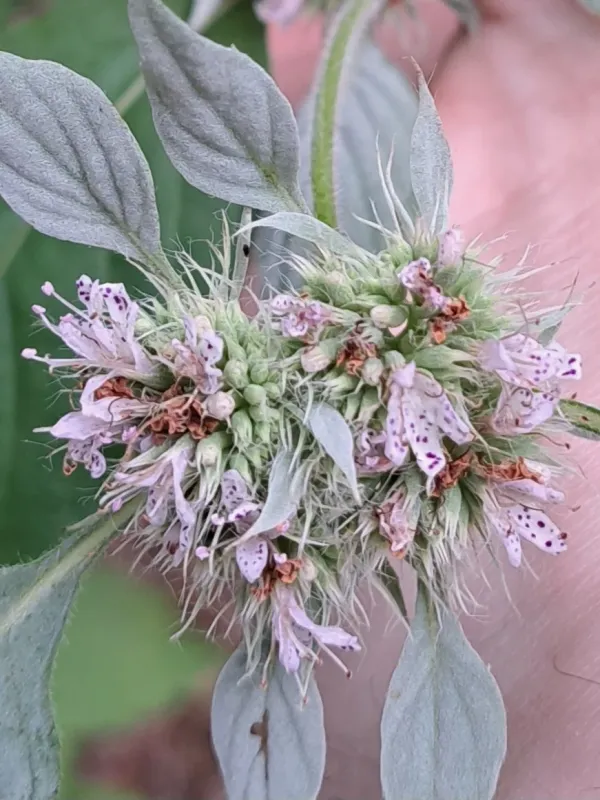
Description
Sowing dates
Sowing seeds of Pycnanthemum pycnanthemoides is typically carried out in the spring when soil temperatures reach 15–18 degrees Celsius. For seedling production, seeds are sown in containers in late winter or early spring, ensuring adequate light levels for germination.
Transplanting seedlings into open ground is performed after the danger of spring frost has passed. When direct sowing into the soil, it is essential to ensure shallow seed placement, as they require light to germinate effectively.
The optimal planting pattern involves a row spacing of approximately 45–60 centimeters, which allows plants to develop fully and form dense clumps. As a perennial, site selection should consider long-term cultivation.
Division of established clumps is an effective propagation method performed in early spring or autumn. This technique allows for uniform planting material with predictable varietal characteristics.
Regular watering is necessary during the first few weeks after planting to ensure successful root establishment and to maintain optimal soil moisture levels in the root zone.
Growing requirements
Pycnanthemum pycnanthemoides belongs to the Lamiaceae family and is a native plant of North America. In its natural habitat, it thrives on sunny meadows, forest edges, and mountainous regions with excellent drainage.
This culture prefers open, well-lit areas, although it can tolerate light shade during the hottest parts of the day. Insufficient light often leads to leggy growth and reduced essential oil concentration in the leaves.
The plant has moderate soil requirements, preferring fertile, loamy, or sandy soils with a neutral or slightly acidic pH. Effective drainage is a critical factor, as stagnant water is detrimental to the plant's root system.
The species exhibits high winter hardiness, allowing it to be cultivated successfully in temperate climates. However, in regions with snowless winters, light mulching of the root zone is recommended to prevent frost damage.
In commercial use, the plant is valued for its high levels of menthol and other aromatic compounds, making it a promising crop for the perfume and food processing industries.
Main diseases and pests
Primary threats to the culture involve fungal diseases caused by excessive soil moisture. Powdery mildew can affect leaves in conditions of high planting density and poor air circulation within the clumps.
Rust diseases also pose a significant risk, manifesting as characteristic spots on the leaf blades. To combat these pathogens, crop rotation and preventing overcrowding in planting beds are essential strategies.
Common pests include aphids and spider mites, which feed on the sap of young shoots. During mass outbreaks, these pests significantly reduce photosynthetic efficiency, leading to a loss in green mass yield.
The use of biological insecticides is the preferred method of pest control, especially if the harvest is intended for food or pharmaceutical applications.
Disease prevention consists of regular thinning of plantings, weeding, and ensuring proper airflow around each individual plant to minimize humidity buildup.
Harvesting
Harvesting raw material is conducted during the peak flowering period when the concentration of essential oils in the aerial parts reaches its maximum level. At this stage, the plant emits its most intense fragrance.
Harvesting is performed by cutting the upper part of the stems at a height of 10–15 centimeters from the soil surface. This promotes better regrowth of lateral shoots and ensures a high-quality second harvest later in the season.
The cut green mass must be dried quickly in a shaded, well-ventilated area to preserve volatile essential oils. Drying under direct sunlight is not recommended, as it leads to pigment degradation and loss of aromatic properties.
After drying, leaves and flowers are separated from stems and stored in airtight containers. Properly dried raw material retains its chemical properties for up to one year.
In commercial cultivation, specialized harvesters with shredding attachments are used to collect the biomass, significantly increasing productivity on large plantations.