
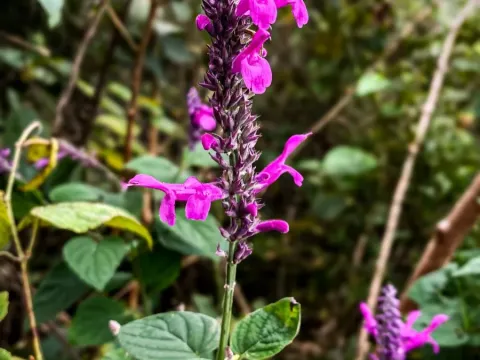
Purple sage
Salvia purpurea
Purple sage (Salvia purpurea) is a perennial herbaceous plant belonging to the Lamiaceae family. It is distinguished by its deep purple bracts and unique floral structure, which make it a plant of both botanical and commercial interest.
What the section contains
Purple sage
The species originates from Central America, specifically the mountainous areas of Mexico and Guatemala. Due to its tropical origins, the plant requires specific temperature controls to thrive in controlled agricultural environments.
The crop demands well-drained, fertile soil with a light texture to ensure optimal root development. Sandy loams are considered ideal, provided they are managed to avoid both nutrient leaching and excessive water retention.
Strategic site selection involves choosing locations with full sun exposure, which is essential for the development of its secondary metabolites and overall plant vigor. Sheltered locations are preferred to protect against strong winds and sudden drops in temperature.
Modern agrotechnical practices for Salvia purpurea include precise irrigation management and moderate fertilization. Regular pruning or trimming is often employed to promote bushier growth and prevent the plant from becoming excessively woody.
Common phytopathological challenges include powdery mildew and various forms of root rot. These diseases are largely environment-dependent, thriving in high humidity and poorly ventilated planting areas where moisture settles on the foliage.
Insect pests, such as aphids, whiteflies, and spider mites, represent a significant threat to leaf health. These pests can rapidly multiply, especially in greenhouse conditions, leading to significant yield losses if not managed promptly.
Effective management includes implementing a robust IPM (Integrated Pest Management) program. This involves regular scouting for early infestation signs and the strategic use of biological control agents to maintain equilibrium in the field.
Soil management is critical; avoiding over-watering is the primary defense against soil-borne pathogens. Using high-quality substrate and ensuring adequate spacing between individual plants helps maintain the necessary airflow.
For chemical interventions, it is imperative to use authorized products according to local safety regulations. Ensuring proper spray coverage on the underside of leaves is essential for effective pest and disease control.