
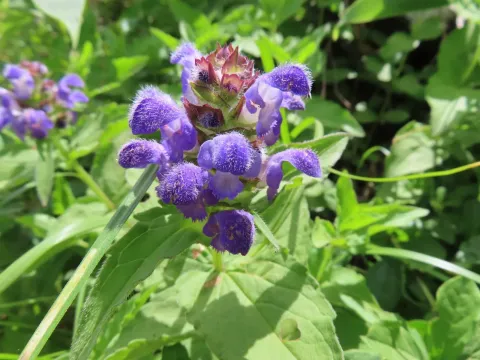
Prunella prunelliformis
Prunella prunelliformis
Sowing of Prunella prunelliformis is primarily conducted using seeds. In temperate regions, seeds are sown in open ground before winter or in early spring, once soil temperatures reach 10–12°C.
What the section contains
Prunella prunelliformis
For seedling production, seeds are sown in greenhouses or frames 6–8 weeks before planting in the field. Seeds do not require deep burial; light covering with substrate or sand is sufficient.
The optimal sowing pattern involves 30–45 cm row spacing, ensuring sufficient room for the development of the basal rosette and subsequent growth of flower stalks.
Seedlings emerge uniformly with regular soil moisture. After the appearance of 3–4 true leaves, thinning is performed to leave a 20 cm distance between individual plants.
The crop demonstrates good vegetative propagation ability, so division of the root system can also be utilized for establishing new plantations in autumn.
Prunella prunelliformis belongs to the Lamiaceae family. It is a perennial herbaceous plant that prefers well-lit areas but can tolerate partial shade.
The crop has moderate soil requirements. Best results are achieved on loose, loamy soils with a neutral or slightly acidic pH and good drainage.
The plant possesses high cold hardiness, characteristic of species adapted to mountainous and foothill regions. It withstands significant temperature fluctuations and early frosts.
The crop is sensitive to soil moisture during its active growth and flowering phases. Prolonged droughts can negatively impact both medicinal quality and biomass yield.
A crucial agrotechnical condition is maintaining clean crops, free from weed competition, as the plant can be easily suppressed during its initial developmental stages.
Economic use of Prunella prunelliformis focuses on harvesting the aerial parts of the plant, which are rich in flavonoids, organic acids, and tannins.
Peak biomass productivity is reached in the second and third years of plantation life. Raw material yield varies based on planting density and the level of agricultural management.
Beyond pharmacological usage, the crop is a valuable early summer honey plant, attracting numerous pollinators and contributing to the yield of surrounding entomophilous crops.
Regular cutting of inflorescences during the harvest process stimulates the development of lateral shoots, which extends the growing season and increases the total annual biomass yield.
With proper crop rotation and moderate organic fertilization, the plantation can be productively exploited in the same location for 5–6 years.
Prunella prunelliformis is noted for its resistance to most common crop diseases, although waterlogging may lead to root rot development.
Under conditions of dense planting and poor ventilation, there is a risk of powdery mildew infection, requiring preventative treatments with sulfur-based or biological fungicides.
Among pests, leaf-eating insects and aphids pose the greatest threat, as they can damage young leaves and shoots during the intensive spring growth period.
Slugs and snails are often active during rainy weather, causing damage to the lower leaves of the plant. Mitigation involves soil loosening and the use of ecological barriers.
- Preventing rot through proper irrigation management.
- Implementing crop rotation to avoid pathogen accumulation.
- Timely weeding to reduce pest pressure.
Raw material harvesting is conducted during the mass flowering phase, when the concentration of biologically active substances in the aerial parts is at its peak.
Cutting is performed in dry weather, leaving stalks at a height of 5–10 cm from the soil surface to preserve the root system and ensure subsequent regrowth.
Harvested material must be transported promptly to the drying facility. The optimal drying regime is in the shade, at 35–40°C, in well-ventilated rooms or professional dryers.
After drying, the material is sorted to remove impurities and yellowed parts. Properly dried material should retain its natural color and characteristic aroma.
Storage is carried out in paper bags or sealed containers in a dry, dark, and cool environment, protected from moisture and direct sunlight.