
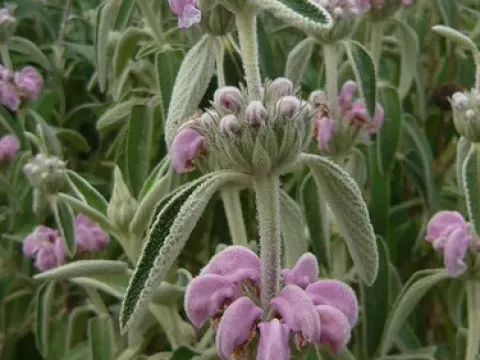
Purple Jerusalem sage
Phlomis purpurea
Purple Jerusalem sage (Phlomis purpurea) is a perennial shrub belonging to the Lamiaceae family, native to the Western Mediterranean region. It is recognized for its woody stems and attractive purple-pink flowers that bloom in late spring and early summer.
What the section contains
Purple Jerusalem sage
This plant thrives in Mediterranean-type climates, requiring full sun and well-drained, nutrient-poor soil. It is highly adapted to rocky or sandy substrates and performs exceptionally well in dry, arid garden conditions where other plants struggle.
One of the key botanical features of Phlomis purpurea is the dense, greyish indumentum (hairs) covering its leaves, which acts as a protective mechanism against intense UV radiation and moisture loss through transpiration.
Regarding climate, while it prefers mild winters, it can tolerate brief periods of frost if the soil remains dry. In colder zones, the plant should be situated against a sunny, sheltered wall to minimize the impact of cold winds and humidity.
Agrotechnical maintenance is relatively low for this species. It does not require frequent fertilization, as excessive nitrogen may result in weak, succulent growth that is more susceptible to winter damage and pest colonization.
The primary threats to the health of Purple Jerusalem sage are moisture-related pathologies. Root rot, caused by stagnant water or compacted soil, is the most common cause of plant failure, particularly during dormant winter months.
While the plant is generally pest-resistant due to its essential oil content, it may occasionally host aphids during periods of rapid spring growth. Monitoring during the early season is advised to prevent localized infestations.
Fungal diseases, such as powdery mildew, can appear in environments with poor air circulation and high humidity. Ensuring wide spacing between individual plants and maintaining a clean growing area significantly reduces the risk.
In containerized cultivation, the risk of pests increases, requiring more attentive management. Use of systemic insecticides should be avoided if possible to protect beneficial pollinators drawn to the nectar-rich flowers.
Effective management includes annual pruning after flowering to maintain the plant's shape and encourage dense growth, as well as the immediate removal of any dead or decaying plant material to prevent fungal spread.