
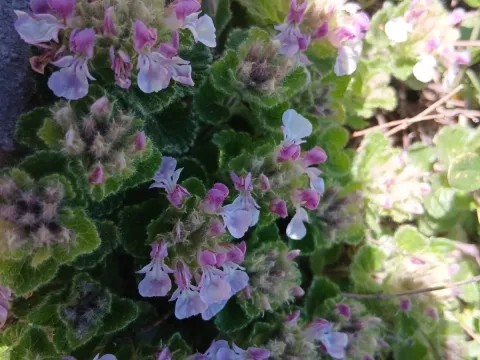
Pyrenean germander
Teucrium pyrenaicum
Pyrenean germander (Teucrium pyrenaicum) can be propagated by seeds or division. The most favorable time for planting seeds is in the spring once the risk of frost has passed.
What the section contains
Pyrenean germander
Seeds benefit from cold stratification to improve germination rates. They should be sown in well-drained, sandy soil and lightly covered to maintain moisture without suffocating the seeds.
Vegetative propagation by division is recommended for established clumps. This process is best performed in early spring or autumn to allow the root system to recover before the peak growing season.
As a member of the Lamiaceae family, this species is well-adapted to rocky environments and poor soils, requiring little intervention once established in the garden.
Spacing is essential for healthy growth; maintaining at least 30 cm between individual plants ensures proper airflow, which is critical for preventing fungal diseases in the humid spring months.
The primary requirement for Teucrium pyrenaicum is excellent drainage. It thrives in stony, alkaline, or neutral soils and cannot tolerate "wet feet" during the winter dormancy period.
Full sun is necessary for the plant to achieve its maximum density and flowering potential. It is an ideal plant for xeriscaping due to its remarkable drought tolerance once established.
Climate-wise, it is very hardy, mirroring its native mountain habitats. It can withstand significant temperature fluctuations, making it suitable for a wide range of temperate climates.
Maintenance is minimal. Weeding during the first year is important to ensure the young plants are not choked by faster-growing grasses, but it becomes quite self-sufficient thereafter.
Fertilization should be avoided or kept to a bare minimum. Excess nitrogen will cause weak, leggy growth that reduces the plant's natural aesthetic and aromatic profile.
The main threats to this species are fungal issues, primarily root rot, which occurs in waterlogged soils. Ensuring a steep incline or sandy substrate is the best preventive measure.
Powdery mildew may appear during periods of high humidity and stagnant air. Proper spacing and selecting an open, windy location in the garden significantly mitigate this risk.
Pests are rarely an issue for this plant, as its strong essential oils act as a natural deterrent. However, in extreme cases, aphids might target the succulent new tips.
Chemical intervention is discouraged, especially for plants intended for medicinal or culinary use. Manual removal or biological soap sprays are preferred for managing occasional pest outbreaks.
Vigilance during the wet season is the most important aspect of plant protection. Monitoring the base of the plant for any sign of decay is vital for longevity.
Harvesting for herbal use should be done at the height of flowering, when the concentration of volatile oils is at its peak. Only the top portions of the stems should be harvested.
Drying must occur in a dark, well-ventilated area to preserve the integrity of the essential oils. Excessive heat or direct sunlight will degrade the medicinal quality of the leaves.
In decorative use, deadheading spent blooms is recommended to extend the flowering period and prevent the plant from putting unnecessary energy into seed production.
Winter cleanup should be light. Leaving the spent foliage in place can provide extra protection for the roots against freezing temperatures, with final pruning occurring in early spring.
The resulting dried herb is valued for its aromatic properties and its historical use in folk medicine, making it a sustainable choice for home apothecary gardens.