
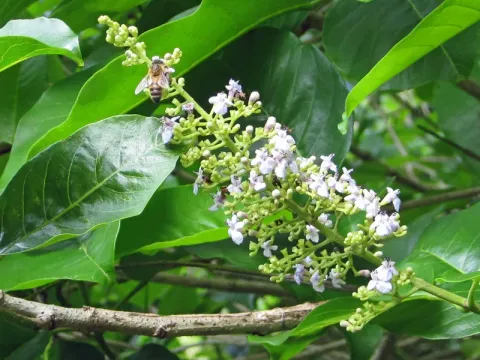
Vitex cofassus
Vitex cofassus
Vitex cofassus is a significant tropical hardwood tree species belonging to the Lamiaceae family. Characterized by its stature and structural density, it serves as a prominent canopy component in its native tropical forests.
What the section contains
Vitex cofassus
The species is primarily distributed across the regions of Southeast Asia and the Pacific Islands, most notably in New Guinea and the Solomon Islands. It thrives in high-rainfall tropical zones where the environment remains consistently warm throughout the year.
The tree requires deep, fertile, and well-drained soils to reach its maximum growth potential. While it favors moist environments, it does not tolerate stagnant water, which can hinder root development and overall health.
Climatic requirements are strictly tropical, necessitating high humidity levels and an absence of frost or prolonged dry spells. These conditions ensure the continuous vegetative growth required for the tree to attain its majestic size.
In addition to its ecological role, Vitex cofassus is highly prized in forestry. Its wood is renowned for its superior durability, attractive grain, and resistance to environmental decay, making it a premium choice for high-end construction and furniture industries.
Sustainable harvesting of Vitex cofassus is essential to ensure the longevity of the species. Selective logging practices are widely encouraged to maintain forest cover and ecological balance within its primary habitats.
After felling, the timber must undergo precise kiln-drying processes. This is crucial for stabilizing the wood's moisture content, which prevents warping and cracking during its extensive use in fine cabinetry and structural works.
The wood's natural characteristics—such as its hardness and finish-holding ability—make it a favorite for flooring and marine applications, where materials are subjected to high levels of physical wear and tear.
Harvesting operations are often seasonal, dictated by the intense rainfall patterns of the region which can render forest roads inaccessible for heavy machinery, requiring strategic long-term planning.
Modern sustainable management strategies emphasize the importance of enrichment planting to compensate for harvested volumes, ensuring that the legacy of this valuable timber source is preserved for future generations.