
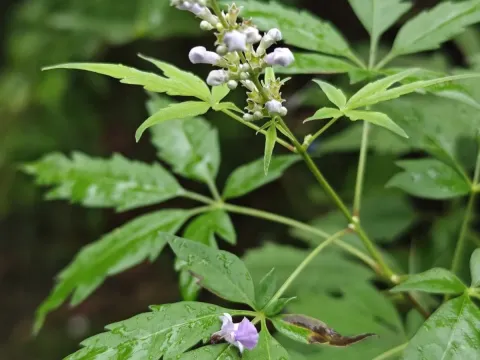
Vitex cannabifolia
Vitex cannabifolia
Vitex cannabifolia is a perennial shrub belonging to the Lamiaceae family. It is distinct for its palmately compound leaves that resemble cannabis foliage, which has earned it the common name "hemp-leaf chaste tree." It is a valued crop, particularly for its chemical profile used in botanical medicine.
What the section contains
Vitex cannabifolia
Native to East Asia, including China, this plant thrives in temperate climates with high solar radiation. For successful cultivation, it requires a well-drained soil structure, preferably loamy or sandy soils with a neutral pH. It does not tolerate waterlogging, as excessive moisture can lead to root system decay.
Agronomic practices for this species focus on site selection and maintenance. The plant performs best in full sun, which is crucial for the maturation of its woody stems and the accumulation of secondary metabolites. Regular pruning is essential to maintain plant vigor and encourage the development of new flowering stalks.
The economic value of Vitex cannabifolia lies in its medicinal application. Its fruits and leaves contain compounds that regulate hormonal balance and act as effective sedative agents. Beyond medicine, the shrub is an excellent ornamental choice for landscapes, known for its late-season spikes of purple-blue flowers.
Maintaining soil fertility through organic amendments during the early spring season supports sustainable yields. Growers should ensure that the planting site is shielded from severe frost, although mature plants can show considerable resilience once established in suitable microclimates.
Vitex cannabifolia is susceptible to fungal issues if grown in humid or poorly ventilated environments. Powdery mildew is the most common pathogen, typically appearing when air circulation is compromised. Ensuring adequate spacing between shrubs significantly reduces this risk.
In terms of insect pests, aphids can occasionally infest the growing tips during the vegetative stage. To manage these populations effectively, integrated pest management (IPM) strategies are recommended, focusing on maintaining natural predator balance and using soft soaps or horticultural oils if intervention is necessary.