
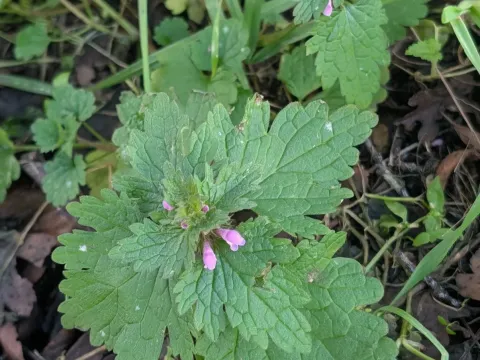
Cut-leaved dead-nettle
Lamium hybridum
The cut-leaved dead-nettle is an annual herbaceous plant that reproduces primarily through seeds. Germination typically begins in early spring when soil temperatures reach a stable 6–8 degrees Celsius.
What the section contains
Cut-leaved dead-nettle
A significant portion of the population emerges during the autumn months, classifying it as a winter annual. The plants often overwinter as rosettes, resuming rapid growth immediately after the winter thaw.
The flowering period spans from late March through June. During this phase, the plant invests significant energy into seed production, ensuring it persists in the seed bank of the soil for subsequent years.
Seed longevity is high, which makes this species difficult to eradicate once it establishes in the field. Seeds can remain viable in the soil for several years, waiting for optimal conditions to emerge.
Agricultural control requires mechanical intervention before the flowering stage. Cultivation and harrowing are the most effective methods to disrupt the lifecycle before seed dispersal occurs.
Lamium hybridum thrives in fertile, well-drained soils with a neutral or slightly acidic pH. It is a common inhabitant of agricultural fields, gardens, and along the margins of managed landscapes.
The species shows remarkable adaptation to temperate climate zones. It tolerates significant fluctuations in temperature and moisture levels, allowing it to colonize diverse environmental niches successfully.
It prefers light to moderate sunlight exposure but is capable of growing in partial shade. This versatility allows the plant to flourish in orchards or under the canopy of perennial crops.
Soil aeration is critical for its health, as the root system does not tolerate waterlogged conditions. It prefers loose, friable soils where nutrients are readily available for rapid biomass accumulation.
Its presence is often a reliable indicator of healthy, nutrient-rich soil. Farmers can view its appearance as a sign of high soil fertility, although it competes with primary crops for nutrients.
The cut-leaved dead-nettle acts as a secondary host for various plant pathogens. It can harbor fungal spores, such as powdery mildew, which then spread to primary cash crops in the vicinity.
Insects like aphids and leaf beetles often frequent the plant. By providing a stable food source and habitat, it helps these pests survive and multiply between the harvesting and planting seasons.
Viral infections can also be mediated by these weeds, as vectors like aphids migrate from the dead-nettle to more sensitive crop species. This poses a significant threat to overall crop health.
Nematodes that utilize the roots of Lamium hybridum can cause long-term damage to the field's soil structure. This is particularly problematic for rotation systems involving root vegetables or legumes.
To mitigate these threats, integrated pest management is recommended. Maintaining clean field boundaries and applying targeted herbicides during the early rosette stage can effectively reduce these risks.