
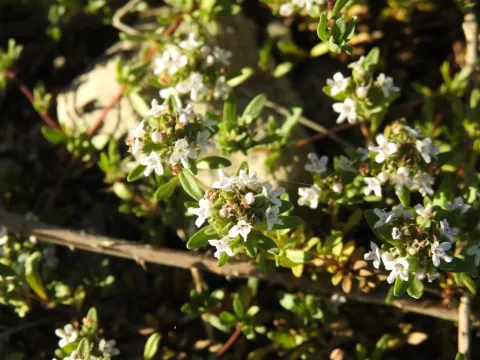
Thymus embergeri
Thymus embergeri
Thymus embergeri is a perennial subshrub belonging to the Lamiaceae family, native to the High Atlas mountains in Morocco. In agriculture, it is typically propagated through seeds or stem cuttings, depending on the desired scale of production.
What the section contains
Thymus embergeri
Seeds are sown in trays or protected nursery beds during early spring. As the seeds are very fine, they are sown on the surface and pressed gently into the substrate, requiring consistent light and moderate humidity to germinate effectively.
Seedlings are transplanted to the field after the danger of frost has passed, usually in May. Proper spacing, typically 30 cm between plants, is essential to allow for adequate airflow, which prevents the build-up of excess humidity around the foliage.
During the first season, the plants focus on establishing a strong root system. Consequently, weed management is critical during this period, as the seedlings can be easily outcompeted by aggressive weeds in the early stages of development.
For uniform crop development, many commercial growers prefer vegetative propagation through cuttings. This method ensures that the morphological characteristics and oil content remain consistent across the entire plantation.
This species is highly demanding of solar energy; full sun exposure is necessary for the plant to produce its characteristic essential oils. In shaded environments, the plants become leggy and lose their aromatic intensity.
Well-drained, sandy, or rocky soils are ideal for this culture. The root system is highly sensitive to waterlogging, so planting on raised beds is recommended to ensure that excess water drains away from the crown of the plant.
Thymus embergeri exhibits good drought tolerance once established. However, during the early growth phase, regular but light irrigation is beneficial. Overwatering is the most common cause of failure in cultivating this specific thyme species.
The soil pH should ideally be neutral or slightly alkaline. In acidic soils, the plants may show symptoms of nutrient deficiency and become more susceptible to fungal pathogens, often requiring limestone amendment before planting.
Fertilization should be kept to a minimum. Excessive nitrogen usage encourages succulent growth that is less resistant to winter frost and produces lower concentrations of aromatic compounds, which is counterproductive for crop quality.
Root rot is the most significant threat to Thymus embergeri, usually caused by stagnant water in the root zone. Proper soil drainage and avoiding overhead irrigation during humid weather are the best preventative measures.
Powdery mildew can affect the foliage in environments with poor air circulation and high humidity. Thinning the plantation and ensuring adequate spacing help to mitigate this risk by promoting rapid drying of the leaves.
Pests like aphids and spider mites can occasionally be problematic, particularly in greenhouses. Integrated pest management using biological predators or plant-based soaps is preferred to maintain the organic standards required for culinary use.
Fusarium wilt is a potential soil-borne disease that can destroy patches of the crop. Crop rotation with non-host species every few years is essential to break the pathogen cycle in the soil.
Maintaining a clean field free of weeds helps minimize the habitat for pests and pathogens. Mulching with inorganic materials like gravel can provide a barrier that protects the plant crown from damp soil.
Harvesting should occur at the peak of flowering, as this is when the concentration of essential oils is at its highest. This timing is critical for maximizing both the aromatic and medicinal value of the final product.
The stems are cut about 5–10 cm above the woody base. This pruning method ensures that the plant has enough energy reserves to regrow for the next season and maintains the health of the perennial stock.
Drying should be carried out in a cool, dark, and well-ventilated space. Keeping the temperature below 40 degrees Celsius prevents the rapid evaporation of volatile aromatic components, preserving the plant's quality.
The culinary and pharmaceutical industries use the harvested material for its antiseptic and flavoring properties. Proper post-harvest handling ensures that the potency remains stable for up to 18 months.
Storage in airtight, opaque containers is essential to protect the dried herb from moisture, light, and oxidation, ensuring the consumer receives a high-quality product that retains its true essence.