
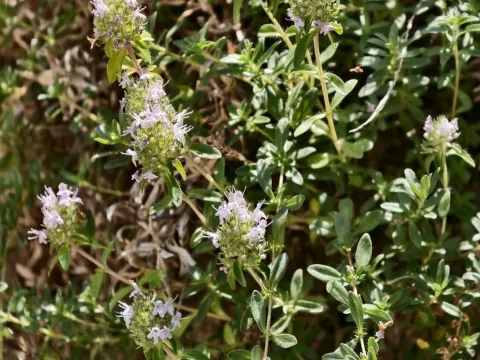
Thymus longicaulis
Thymus longicaulis
The sowing of Thymus longicaulis is carried out in early spring when the soil temperature consistently reaches 10–12 degrees Celsius. For nursery production, seeds are sown in greenhouses during March, ensuring robust seedlings are ready for field transplantation.
What the section contains
Thymus longicaulis
For direct seeding, seeds are sown at a shallow depth of no more than 1 cm, as they are minute and require light for optimal germination. Covering the seeds with a thin layer of sand or compost helps maintain surface moisture during the germination process.
An optimal planting layout involves maintaining rows 45–60 cm apart, which facilitates weed management and mechanical operations. Within the row, plants should be spaced at 20–30 cm intervals to accommodate natural spreading.
Seedlings emerge slowly, typically taking 14–20 days, during which time it is crucial to keep the plot free from weeds to prevent competition. Ensuring consistent moisture levels in the initial weeks is vital for successful establishment.
Utilizing stratified seeds can promote more uniform germination, which is a significant advantage when managing commercial-scale thyme plantations.
Thymus longicaulis is a perennial subshrub belonging to the Lamiaceae family, known for its excellent drought tolerance and preference for sun-exposed locations. It thrives in open fields protected from harsh, cold winds.
The crop performs best in light, sandy, or loamy soils with a neutral to slightly alkaline pH. Excellent soil drainage is a fundamental requirement, as waterlogging in the root zone is detrimental to the plant's health and longevity.
Originating from mountain regions, this species is well-adapted to varied temperatures and exhibits high winter hardiness. While it tolerates minor frosts, protective mulch may be necessary during harsh, snowless winters.
During the active growth phase, the application of potassium-phosphorus fertilizers is beneficial for increasing essential oil content. Excessive nitrogen application should be avoided, as it encourages soft vegetative growth at the expense of aromatic quality.
Due to its biological resilience, Thymus longicaulis can effectively populate rocky or eroded areas, offering a sustainable land-use option for degraded soils where other crops might fail.
The economic efficiency of Thymus longicaulis production evolves over time, with maximum biomass yield typically achieved during the second and third years of the plantation's life cycle.
Average yields range from 5 to 8 tons of raw biomass per hectare, with the concentration of essential oils varying depending on the harvest phase and environmental conditions during the growing season.
To maximize productivity, plantations are periodically trimmed, a practice that stimulates vegetative branching and increases the volume of fresh, high-quality shoots produced throughout the season.
Drying the harvested material at temperatures not exceeding 40 degrees Celsius is essential to preserve the volatile components that determine the crop's market value in the pharmaceutical and food industries.
A well-managed plantation can remain productive for 5–7 years, after which a renewal of the planting stock or crop rotation is recommended to maintain soil fertility and plant vigor.
Fungal infections, particularly root rot, are the most significant threats to Thymus longicaulis, especially in conditions of high humidity and poor air circulation. Proper row spacing is the primary preventive measure.
Common pests include spider mites and specific weevil species. An integrated pest management approach, utilizing biological controls, is highly recommended to protect the crop without compromising the quality of the essential oils.
Dense canopies can lead to powdery mildew outbreaks. Consistent weeding and timely thinning of the plants ensure sufficient airflow, reducing the risk of pathogen colonization.
Preventive care focuses on site selection, ensuring high drainage and adequate sun exposure to keep the foliage dry and healthy throughout the growing season.
Starting with healthy, certified seeds is the best defense against viral and fungal pathogens, ensuring a robust foundation for the life of the plantation.
The harvest should occur during the full bloom phase, as this is when the essential oil content in the aerial parts is at its peak. Timing is critical for achieving the highest possible aromatic profile.
Stems are cut at a height of 5–10 cm above the soil surface, using specialized machinery or manual tools, allowing the root system to recover and push new growth for subsequent harvests.
Under favorable climatic conditions and proper moisture management, it is often possible to achieve two harvest cycles per season, significantly increasing the profitability of the operation.
Harvested material must be transported to the drying facility immediately. Leaving cut thyme in piles can lead to heating and fermentation, resulting in rapid loss of valuable essential oils.
Post-harvest maintenance, including light inter-row cultivation, is necessary to prepare the plants for the next cycle and ensure they enter the winter period in good physical condition.