
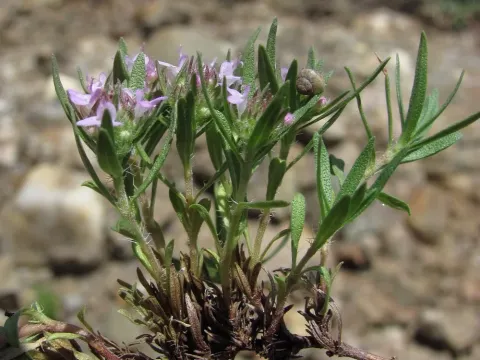
Thymus callieri
Thymus callieri
Thymus callieri is a perennial aromatic plant belonging to the Lamiaceae family. In agricultural practices, seeds are sown in early spring as soon as the soil warms up to 5–8 degrees Celsius.
What the section contains
Thymus callieri
Winter sowing is also an option in late October, allowing the seeds to undergo natural stratification. For greenhouse production, sowing in trays during February or March provides robust seedlings for transplanting.
Thyme seeds are extremely small, requiring a shallow sowing depth of no more than 0.5–1 cm. Surface sowing often requires light mulching or a thin layer of sand to maintain moisture levels in the topsoil.
Germination typically occurs 14–20 days after sowing, depending on thermal conditions and seed bed preparation. It is essential to maintain consistent substrate moisture until the plants develop their first true leaves.
Vegetative propagation via division or cuttings is performed in late April or late August to avoid the stress of extreme summer heat during the establishment phase.
This crop demands high light intensity and prefers open, sunny locations. In shaded areas, the plant tends to lose its vigor and significantly reduces the concentration of volatile essential oils.
Soil conditions should be light, well-drained, and have a neutral pH level. Thymus callieri suffers easily on heavy clay soils where water logging can lead to root rot and winterkill.
The plant is highly drought-tolerant, although regular irrigation is necessary during the first year of growth for proper root development. Mature plants withstand moisture deficit better than excessive watering.
Optimal plant spacing is crucial to ensure good air circulation, which prevents the development of fungal diseases. Planting density is generally maintained at 8–10 plants per square meter.
Hardiness is generally sufficient for most temperate regions, although young plantations may benefit from light protective cover during snowless winters to prevent dehydration.
Economic performance is closely linked to the plantation's age and management intensity. Yields during the first year are modest as the plant focuses on vegetative and root system development.
Maximum dry biomass yield is usually achieved in the second or third year of production. On average, dry herb yields range from 1.5 to 2.5 tonnes per hectare depending on site conditions.
The essential oil content in the dried herb varies between 0.5% and 1.2%. This parameter is highly dependent on solar exposure and the stage of development at the time of harvesting.
Harvesting is conducted during the mass flowering phase, as this is when the concentration of active compounds in leaves and flowers is at its peak. In warmer climates, two cuts per season may be possible.
Processing must include rapid drying at temperatures not exceeding 40 degrees Celsius to maintain high product quality and prevent the degradation of aromatic compounds.
Fusarium wilt is a primary threat, especially in conditions of high humidity and poor soil aeration. Infected plants should be removed and disposed of to prevent the spread of the pathogen.
Common pests include aphids and weevils, which can damage succulent new shoots and floral buds. Integrated pest management using bio-pesticides is recommended for organic herb production.
Powdery mildew can infect leaves during periods of fluctuating temperature and high humidity. Maintaining proper spacing and weed control are effective preventative measures.
Nematodes can cause significant root damage, leading to stunted growth and yellowing of the foliage. Crop rotation and proper soil preparation are essential strategies for mitigating nematode pressure.
Root rot caused by waterlogging is a common issue for all Thymus species. Regular monitoring of the drainage system is a mandatory agricultural task to ensure the longevity of the stand.
Harvesting is performed strictly during dry, sunny weather when there is no residual dew on the foliage. This reduces post-harvest drying costs and improves the quality of the dried product.
Stems are cut at 5–10 cm above the ground, leaving enough biomass for the plant to regenerate effectively for the next harvest or winter dormancy.
Industrial harvesting typically uses specialized mowers with pick-up mechanisms. It is critical to minimize the inclusion of soil and foreign plant matter to meet high-quality industry standards.
Harvested material should be delivered to the drying facility immediately to avoid heating and fermentation, which can rapidly diminish the quality of the essential oils.
Final storage should be in dry, ventilated, and dark areas using paper or textile bags. Protecting the product from moisture and direct light is essential to preserve the aroma and medicinal properties.