
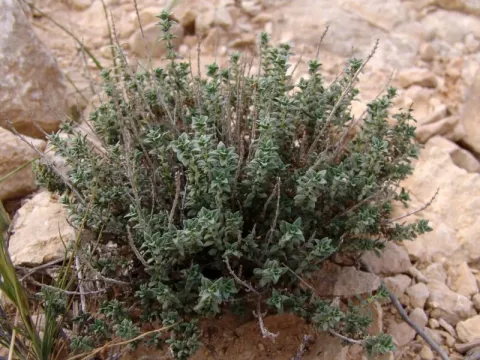
Thymus bovei
Thymus bovei
Thymus bovei is a perennial herb that thrives when established during the early spring season, allowing plants to root before the summer heat.
What the section contains
Thymus bovei
The seeds are extremely small, necessitating a shallow sowing depth of less than 0.5 cm to ensure that light triggers the germination process.
For commercial production, starting seedlings in a controlled environment is recommended to guarantee higher survival rates and more uniform field establishment.
Proper spacing is crucial to allow adequate airflow, which is necessary for the plant's health and to facilitate easier mechanical weeding between rows.
Once established, the crop demonstrates good vigor, but the initial phase requires consistent but light moisture to prevent the soil from crusting.
Belonging to the Lamiaceae family, Thymus bovei is a Mediterranean-type plant that requires full sunlight exposure for optimal growth and oil synthesis.
Well-drained, sandy or gravelly soil types are essential for this species, as it is highly intolerant of waterlogged conditions that cause root decay.
The plant performs best in neutral to slightly alkaline soil conditions and requires minimal fertilization compared to other vegetable crops.
Due to its native range in arid regions, it is exceptionally drought-tolerant once it has fully developed its deep root system in the field.
In high-humidity areas, cultivation on raised beds or mounds is a common agricultural practice to enhance drainage and prevent plant loss.
Root rot caused by fungal pathogens is the most significant threat, typically triggered by improper irrigation and poor soil drainage.
Pests such as aphids and leaf beetles can cause damage to tender foliage during the spring growing season, requiring prompt monitoring.
Integrated pest management, including weeding and thinning, is the primary method for maintaining healthy populations without heavy chemical use.
Air circulation remains the best preventive measure against the spread of fungal diseases within the dense foliage of the thyme crop.
Early detection of infestation allows for targeted interventions, preserving the quality of the essential oil production for commercial use.
Harvesting is ideally performed during the peak of the flowering stage, which ensures the highest concentration of volatile oils and aromatic compounds.
The upper 15–20 cm of the shoots are typically cut, ensuring that the woody base remains intact to support the plant's regrowth in subsequent seasons.
Post-harvest processing involves rapid drying in shaded, well-ventilated areas to prevent oxidation and ensure the shelf life of the final product.
This crop is highly valued in the pharmaceutical, culinary, and cosmetic industries for its unique chemical profile and pleasant sensory characteristics.
Maintaining temperature control during the drying process is critical to avoiding the loss of aromatic compounds, ensuring a premium-grade yield.