
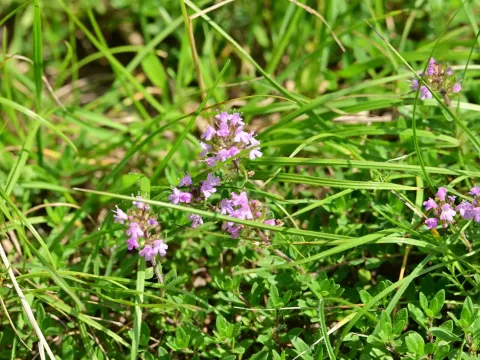
Thyme
Thymus odoratissimus
Thymus odoratissimus is a perennial essential oil crop belonging to the Lamiaceae family. In agricultural practice, seeds are sown in early spring once the soil temperature consistently reaches 6–8 degrees Celsius, or they can be sown late in the autumn for winter survival.
What the section contains
Thyme
Due to the extremely small size of the seeds, they are planted at a very shallow depth, usually not exceeding 0.5–1 cm. Proper seedbed preparation is vital to ensure optimal soil contact and capillary water absorption for successful germination.
Many growers prefer using a seedling method to ensure uniform crop establishment and to reduce competition from weeds during the vulnerable early growth stages. Seedlings are transplanted into open fields after the risk of frost has passed.
The crop exhibits a slow initial growth rate, which necessitates effective weed management strategies during the first few months. Mechanical inter-row cultivation must be performed carefully to avoid disturbing the shallow root system.
Vegetative propagation, such as division or stem cuttings, is also a highly effective method for scaling up production while maintaining the specific aromatic characteristics of the parent plants.
Thyme is a heliophilous plant that requires full, direct sunlight to synthesize high levels of essential oils. Any significant shading during the growing season will negatively impact both the yield and the quality of the raw material.
The plant thrives in light, well-drained soil types, such as sandy loams or loamy soils. It prefers a neutral to slightly alkaline soil pH, which enhances nutrient uptake and overall plant vigor.
Waterlogging is detrimental to this crop; therefore, fields must have excellent drainage. Sloping sites or elevated plots are ideal for preventing excess moisture accumulation around the crown of the plant.
While the plant is highly drought-tolerant once established, providing balanced fertilization—particularly with phosphorus and potassium—helps improve winter hardiness and plant resilience against environmental stress.
Adequate air circulation is also critical to prevent moisture buildup around the foliage, which is a major factor in reducing the risk of fungal outbreaks within the crop canopy.
Productivity peaks during the second and third years of growth. With proper care and optimal environmental conditions, the yield of fresh green mass can reach approximately 5 to 8 tons per hectare.
The economic value of this crop is primarily driven by the concentration of its essential oils. Under favorable conditions, oil content can range between 0.5% and 1.2% of the dry weight, making it a valuable resource for the pharmaceutical and fragrance industries.
Regular pruning and maintenance practices stimulate branching and the formation of new reproductive shoots, which directly contributes to higher harvest volumes in subsequent growing seasons.
Host use of the raw material is diverse, ranging from food flavoring and herbal medicine to the extraction of bioactive compounds for luxury cosmetic and health applications.
Efficient management allows for a productive plantation lifespan of five to seven years, after which land rotation is recommended to maintain soil fertility and minimize pest pressures.
Fungal diseases such as Alternaria blight and Fusarium wilt are the most significant threats to thyme cultivation, particularly in humid climates. These conditions often arise when drainage is insufficient.
Pests, including certain leaf beetles and aphids, can cause significant damage to foliage and flower buds, thereby reducing total yield. Integrated pest management (IPM) strategies are recommended to mitigate these risks.
Root-knot nematodes can present a challenge, especially in heavier soils. Crop rotation and avoiding previous plantings of other Lamiaceae species are essential preventative measures against these pathogens.
Regular field monitoring is necessary to detect early signs of infection or insect activity. Removing infested plant parts helps isolate potential outbreaks before they spread across the entire plantation.
The use of chemical pesticides is strictly regulated and often restricted due to the end-use of the product in medicinal and food applications, making biological controls the preferred approach.
The harvest should take place during the peak flowering stage, which is when the plant's essential oil concentration is at its maximum. Timing is critical for securing high-quality market-ready material.
Using specialized equipment or hand tools, the shoots are cut 5–10 cm above the ground. Leaving a sufficient portion of the stem ensures rapid regrowth and protects the plant from physiological damage.
After harvesting, the material should be processed immediately by drying it in the shade or in specialized forced-air dryers at temperatures not exceeding 35–40 degrees Celsius to preserve volatile compounds.
Once dried, the herb should be cleaned, sorted, and stored in airtight, cool, and dark conditions to prevent oxidation and the degradation of its aromatic oils.
In regions with a long growing season, a second harvest may be possible, significantly increasing the profitability of the operation while maximizing the efficiency of the agricultural land.