
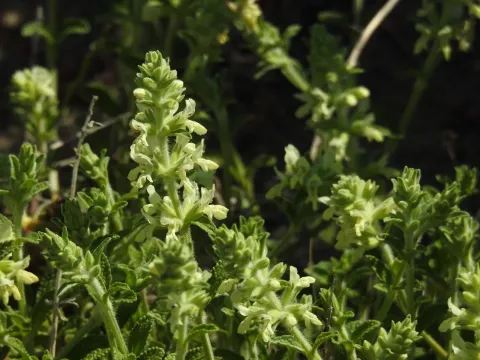
Sea woundwort
Stachys maritima
Stachys maritima, commonly known as sea woundwort, is a perennial herbaceous plant belonging to the Lamiaceae family. It is distinct for its adaptation to coastal sandy dunes and maritime habitats.
What the section contains
Sea woundwort
The plant features dense silvery-white hairs covering its foliage, an evolutionary trait that protects the plant from salt spray, intense sunlight, and water loss through transpiration.
Cultivation requires loose, sandy, or stony soils that ensure rapid drainage. This species thrives in poor soils and does not require significant fertilization, as excessive nutrients can negatively affect its natural habit.
Stachys maritima is highly heliophilous, meaning it requires full exposure to direct sunlight. It is exceptionally tolerant of saline soils, making it an excellent candidate for coastal landscaping and dune restoration projects.
Regarding agricultural practices, it is essential to mimic its natural environment. Avoiding soil compaction and providing excellent aeration around the base of the plant are the two most critical factors for successful long-term growth.
The primary threats to Stachys maritima are fungal infections, particularly root rot (Pythium or Phytophthora), which occur almost exclusively when soil moisture levels are too high.
Powdery mildew represents a significant risk if the foliage remains damp for extended periods or if air circulation around the plant is insufficient during humid weather conditions.
Insect pests such as aphids can cause localized damage to the tender stems, particularly when the plant is stressed by improper environmental conditions or nutrient imbalances.
Spider mites are another common pest, appearing during hot and dry spells, often causing the leaves to lose their vibrant silver color and become yellow or mottled.
Effective management includes maintaining a dry crown area and ensuring the plants are spaced appropriately to allow for natural drying of the leaves after rain or dew.