
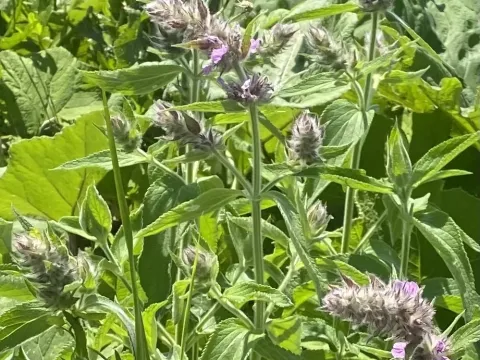
Stachys spectabilis
Stachys spectabilis
Stachys spectabilis is a perennial herb belonging to the Lamiaceae family, known for its specific growth cycle and requirements for successful germination.
What the section contains
Stachys spectabilis
Seeds are typically sown in late autumn to allow for winter stratification, which is crucial for breaking seed dormancy and ensuring uniform emergence.
For spring sowing, cold stratification is required for 6 to 8 weeks; otherwise, the germination rate will be significantly reduced under standard conditions.
Vegetative propagation is the preferred method for maintaining the purity of the variety, involving the division of root clumps during the dormant season.
When planting, it is recommended to space specimens at least 30 to 45 centimeters apart to provide enough air circulation and room for root system development.
This plant thrives in full sun, requiring at least six hours of direct light daily to produce healthy foliage and abundant floral displays.
It prefers well-drained, sandy or loamy soils that prevent waterlogging, as the species is highly sensitive to root suffocation in heavy, saturated substrates.
Stachys spectabilis is notably drought-tolerant once established, making it a suitable candidate for low-maintenance garden layouts and xeriscaping.
Soil pH levels should be maintained in the neutral to slightly alkaline range to ensure optimal nutrient uptake and long-term plant health.
Fertilization should be kept to a minimum; a small amount of organic compost added to the planting site is usually sufficient for the entire growing season.
Powdery mildew is the most common fungal issue, especially in environments with high humidity and poor airflow around the basal leaves.
Root rot, caused by various species of Pythium or Phytophthora, remains a significant threat if the soil structure does not provide adequate drainage.
Gastropods such as slugs and snails are frequent pests, particularly in shaded or damp locations, where they feed on the succulent parts of the plant.
Occasional infestations by spider mites may occur during hot, dry spells, causing chlorosis and a scorched appearance on the affected leaves.
Integrated pest management, including weeding and thinning of overcrowded plantings, remains the best practice for maintaining a healthy stand of plants.