
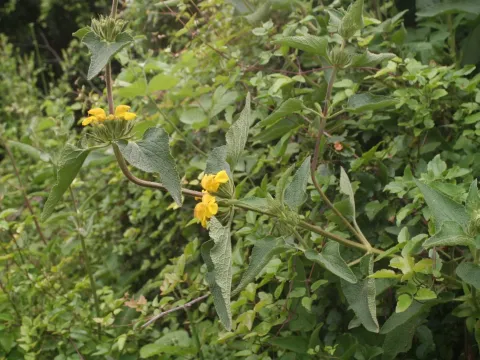
Sticky Jerusalem sage
Phlomis viscosa
Sowing Phlomis viscosa seeds is best performed in late autumn, as the seeds require a period of cold stratification to trigger germination.
What the section contains
Sticky Jerusalem sage
For spring sowing, seeds must undergo artificial stratification in a controlled environment at 2–5 degrees Celsius for about six weeks.
Seeds should be sown at a shallow depth of 1–2 centimeters, as they are small and require sufficient warmth to sprout effectively.
Transplanting seedlings grown in greenhouses is often more reliable than direct seeding for establishing uniform and healthy commercial crops.
Maintaining a row spacing of 50 to 60 centimeters ensures adequate airflow and space for the plants to mature without competing for nutrients.
Sticky Jerusalem sage is a perennial shrub from the Lamiaceae family, known for its extreme resilience and drought tolerance.
It thrives in open, sunny locations with well-draining soil, as it is highly susceptible to root damage from waterlogging.
The plant performs best in neutral to slightly alkaline soils and does not require frequent fertilization to maintain its health.
Its natural habitat conditions require minimal maintenance, making it a sustainable choice for xeriscaping or medicinal crop production.
During the first year, young plants may need extra protection from hard frosts, but mature plants exhibit strong winter hardiness.
The yield of this crop is measured by the biomass of dried foliage and flowering stems used in herbal medicine and landscape gardening.
Commercial plantations can produce between 3 and 5 tons of raw material per hectare, depending on soil quality and plant maturity.
Optimal biomass production is typically achieved starting from the second or third growing season after the initial establishment.
Seed production is generally secondary, with harvest volumes limited due to the plant's natural propagation cycles and seed size.
With consistent care, a field of Phlomis viscosa can remain highly productive for up to seven years before requiring renewal.
The plant possesses natural pest resistance due to its sticky foliage and chemical compounds that act as natural deterrents.
Fungal issues, particularly root rot, represent the primary threat to the crop, usually caused by improper irrigation practices.
In cases of extremely damp seasons, mildews may appear, requiring manual thinning to improve air circulation within the plant canopy.
Pest management focuses on preventive measures and biological controls rather than chemical pesticides to ensure the purity of the harvest.
Keeping the area around the base of the plant free of debris helps reduce the risk of humidity-related pathogens and soil-borne diseases.
Harvesting should be timed to coincide with the peak flowering period, which maximizes the concentration of volatile oils in the plant tissues.
Collected plant material must be dried in a shaded, well-ventilated area to maintain the integrity of its color and medicinal properties.
It is best to conduct the harvest during dry weather, preferably mid-morning after the morning dew has completely evaporated.
Seeds should be collected manually once the seed heads have turned brown, indicating maturity and viability for future sowing cycles.
Post-harvest management involves light pruning to tidy the bushes, which helps the plant store energy for the subsequent spring growth cycle.