
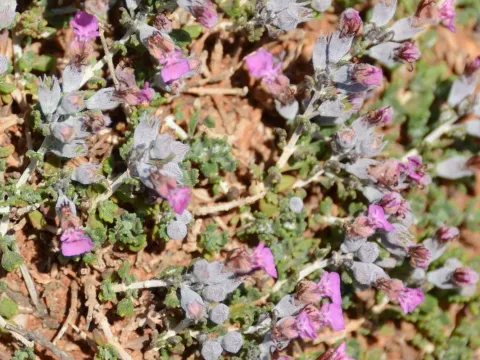
Small-leaved germander
Teucrium microphyllum
Small-leaved germander (Teucrium microphyllum) is a perennial subshrub belonging to the Lamiaceae family. This species is recognized for its drought tolerance and the presence of valuable aromatic oils within its foliage.
What the section contains
Small-leaved germander
Originating from Mediterranean-type climates, the plant typically thrives in rocky outcrops and limestone-based soils. It requires extensive sunlight to maintain its structural integrity and optimize the concentration of its essential oils.
Agronomic management focuses on providing well-drained, porous soil conditions to prevent root asphyxiation. The plant shows high sensitivity to waterlogging, necessitating the selection of elevated plots or specialized substrates.
Temperature requirements are moderate; while it handles heat well, protection from harsh, drying winds and severe winter frosts is recommended to ensure the longevity of the perennial crown.
The main agricultural usage includes its harvest for the essential oil industry, where its unique terpene profile is valued, as well as its role in xeriscaping, where it serves as a low-maintenance, drought-resistant garden plant.
The most common disease threat is root rot, typically caused by Phytophthora or Pythium species when soil moisture levels exceed the plant's physiological capacity to absorb water effectively.
Fungal leaf spots can occur during humid seasons, often requiring the strategic pruning of inner branches to enhance airflow and reduce the environmental favorability for pathogen growth.
Pest management primarily involves monitoring for spider mites, which thrive in hot, arid conditions and can quickly colonize the undersides of the small leaves, causing chlorosis and plant decline.
Aphids also represent a potential issue, particularly in the spring during the flush of new growth, often requiring intervention if populations exceed economic thresholds for crop safety.
To minimize damage, integrated pest management practices should prioritize sanitation, such as the removal of dead plant material at the end of the season, which eliminates overwintering sites for various pests.