
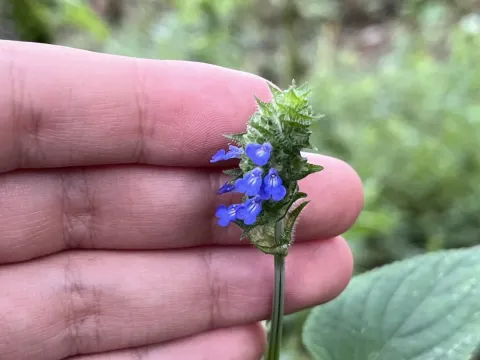
Salvia hyptoides
Salvia hyptoides
Salvia hyptoides is a perennial herbaceous plant belonging to the Lamiaceae family. Commercial cultivation typically begins in early spring, once soil temperatures reach a stable 10-12 degrees Celsius to support consistent germination.
What the section contains
Salvia hyptoides
Seeds should be sown at a shallow depth of 0.5 to 1.5 cm. Because the seeds are relatively small, they require a well-prepared seedbed with fine soil structure to ensure good contact and successful sprout emergence.
For more controlled environments, indoor propagation in greenhouses is common. Starting plants indoors 6-8 weeks before the last frost allows for stronger root establishment and higher survival rates upon transplanting.
Planting density is crucial for long-term health. A spacing of 40-50 cm between rows and 20-30 cm between individual plants is generally recommended to allow for optimal airflow and mechanized weed control.
The selection of site location is equally important; growers must ensure that the planting area is well-drained and receives full sun to promote the development of essential oils within the biomass.
Salvia hyptoides thrives in regions with moderate climates, preferring sunny spots protected from harsh, drying winds. While the plant shows some drought tolerance once established, consistent moisture is vital during the initial growth phases.
Soil requirements are centered on well-drained, sandy loam, or loamy soil textures. It is essential to avoid sites prone to waterlogging, as the species is highly susceptible to root damage when exposed to stagnant water conditions.
Nutrient management involves applying balanced fertilizers, with a specific focus on phosphorus and potassium to strengthen cell structure and enhance winter resilience. Excessive nitrogen fertilization should be avoided.
The optimal temperature range for active growth is between 18 and 25 degrees Celsius. The species exhibits resilience to various climatic conditions but requires proper mulching in colder climates to protect the roots from freezing temperatures.
Regular cultivation and hoeing are recommended throughout the growing season. This practice not only suppresses weed growth but also improves soil aeration, which is critical for root health and overall plant vigor.
Fungal diseases, specifically powdery mildew, represent the primary threat to Salvia hyptoides, especially in humid and poorly ventilated environments. Proper plant spacing is the first line of defense against these infections.
Root rot caused by pathogenic fungi is a common issue resulting from over-irrigation. Maintaining a strict drainage management plan is essential to prevent soil-borne diseases that can quickly destroy entire patches.
Pest pressures primarily include aphids and spider mites, which feed on the sap of young stems and foliage. These infestations can significantly stunt growth and degrade the quality of the harvested herbal material.
Integrated Pest Management (IPM) strategies, including the use of biological control agents, are preferred over synthetic pesticides. This ensures that the final product meets safety standards for use as a medicinal or culinary herb.
Crop rotation is a fundamental practice in the agrotechnology of Salvia hyptoides. By moving the crop to a new site every few years, growers can effectively break the cycle of site-specific diseases and pests.