
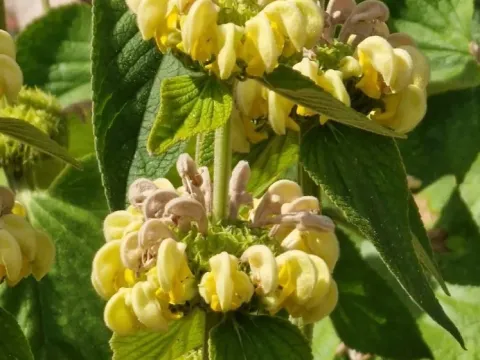
Russel's sage
Phlomis russeliana
Russel's sage (Phlomis russeliana) is typically propagated via seeds, which benefit significantly from a stratification process to break dormancy. Sowing should ideally begin in early spring in a greenhouse or controlled indoor environment.
What the section contains
Russel's sage
For outdoor planting, seeds can be sown directly once the soil warms up in late spring. Maintaining a planting depth of approximately 1-2 centimeters helps ensure consistent moisture for germination without restricting early seedling growth.
Vegetative propagation via root division is another highly effective method. The optimal time for dividing mature clumps is either early spring before new growth starts or in late summer after the main flowering phase concludes.
When transplanting nursery-grown specimens, allow 50 to 60 centimeters of spacing between plants. This density prevents overcrowding and encourages healthy airflow, which is critical for the long-term vitality of the plant.
Newly transplanted specimens should be watered regularly until they establish a robust root system, after which the plant becomes exceptionally resilient to dry soil conditions.
As a member of the Lamiaceae family, Phlomis russeliana is native to Turkey and thrives in environments that offer plenty of direct sunlight. It is a robust perennial known for its architectural form and textured foliage.
The plant requires well-draining soil to prevent root rot, which is the primary cause of decline in this species. It performs exceptionally well in average garden soils, including those with moderate fertility, provided they are not waterlogged.
Regarding climate, Russel's sage is quite cold-hardy and adapts well to various temperate zones. It is highly valued for its drought tolerance once established, making it a perfect candidate for low-maintenance landscaping.
Cultural practices should include minimal pruning. Removing spent flower stems can enhance the aesthetic appeal of the plant and prevent excessive self-seeding, ensuring the garden remains tidy throughout the season.
Fertilization is generally unnecessary, as the plant is adapted to leaner soil conditions. However, an annual application of compost in the spring can support vigorous growth and improve soil structure.
Phlomis russeliana is remarkably resistant to pests and diseases, which is one of the reasons it is highly favored in sustainable gardening. Most health issues arise from improper placement or excessive soil moisture.
The most common disease concern is powdery mildew, particularly in areas with high humidity and stagnant air. Proper site selection and ensuring sufficient space between plants are the best preventative measures.
Insect pests such as aphids or leaf-eating larvae may appear sporadically, but they rarely cause damage that threatens the life of the plant. A simple wash or targeted insecticide application is usually sufficient if control is needed.
Maintaining clear surroundings by removing fallen leaves and debris around the base of the plant helps prevent the spread of fungal spores and discourages overwintering pests.
By prioritizing soil drainage and ensuring the plant receives maximum exposure to sunlight, gardeners can effectively mitigate the majority of risks associated with cultivating this species.