
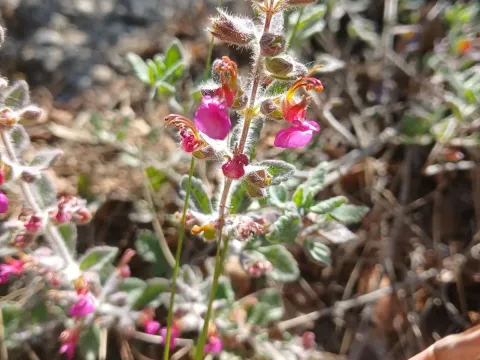
Stiff germander
Teucrium divaricatum
Teucrium divaricatum, commonly known as Stiff germander, is a perennial plant belonging to the Lamiaceae family. It is native to the Mediterranean basin, where it thrives in rocky, arid, and well-exposed limestone landscapes.
What the section contains
Stiff germander
For agricultural cultivation, this species requires well-drained, alkaline, or neutral soils. It is highly intolerant of waterlogged conditions, which frequently cause root rot and rapid senescence in managed crops.
The plant demonstrates exceptional drought tolerance once established. Its morphological adaptations, such as dense leaf pubescence, allow it to minimize transpiration and conserve water under high-temperature conditions.
Optimal growth is achieved in full sunlight. Proper spacing is essential to ensure adequate airflow, which prevents humidity-related diseases and maintains the plant's characteristic compact, spreading habit.
Agricultural practices for this crop involve minimal fertilization, as high nutrient levels can adversely affect the concentration of secondary metabolites, such as essential oils, which are of primary economic interest.
The main threats to Teucrium divaricatum are associated with fungal pathogens thriving in high-moisture environments. Root rot and collar rot are the most common issues arising from improper drainage.
Powdery mildew can occur during periods of high humidity or poor air circulation. Management strategies include improving ventilation through proper pruning and the application of sulfur-based fungicides when necessary.
Pests such as aphids and spider mites can occasionally affect tender new growth. Integrated pest management (IPM) practices, such as encouraging beneficial predatory insects, are preferred for this medicinal herb.
Preventative measures include the use of gravel or inorganic mulch around the base of the plants to prevent direct contact between foliage and moist soil, which reduces the risk of infection.
Maintaining a regular harvest schedule for herbal material helps in promoting healthy new growth and keeps the plant population vigorous and less susceptible to disease outbreaks.