
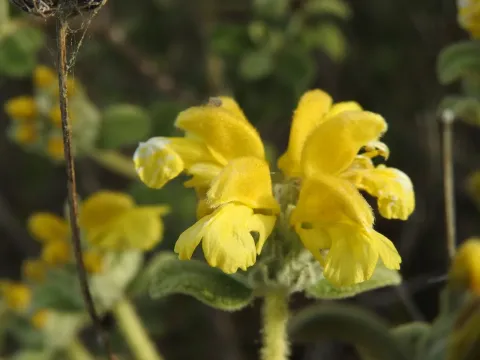
Woolly Jerusalem sage
Phlomis lanata
Woolly Jerusalem sage (Phlomis lanata) is a perennial subshrub belonging to the Lamiaceae family. Native to the eastern Mediterranean, particularly the island of Crete, this plant is well-adapted to harsh, arid climates.
What the section contains
Woolly Jerusalem sage
The culture thrives in full sun exposure and is highly valued for its exceptional drought tolerance. It requires well-draining soil, as it cannot survive in waterlogged conditions or environments with poor drainage.
In terms of soil preference, it favors rocky, gritty, or sandy substrates that are relatively low in nutrients. It performs best in neutral to slightly alkaline pH conditions, making it an excellent candidate for xeriscaping.
Botanically, the plant is characterized by its distinctive woolly indumentum—a dense covering of soft, greyish-white hairs on its leaves and stems. This physical trait helps the plant conserve moisture and reflect intense solar radiation.
Economically, it is cultivated for ornamental purposes in rock gardens and landscapes due to its unique texture. Additionally, members of the genus Phlomis are historically harvested for their essential oils and medicinal properties.
The primary threat to Phlomis lanata is high soil moisture levels. Excessive water leads to root rot and crown rot, which are often fatal to the plant if the drainage is not managed effectively.
High humidity combined with poor air circulation can lead to outbreaks of powdery mildew. To mitigate this risk, it is essential to provide adequate spacing between plants to encourage airflow through the foliage.
Pests such as aphids may occasionally infest the plant, particularly during the active growing season. Integrated pest management, focusing on early detection and biological controls, is recommended over heavy chemical use.
Winter hardiness is a concern in climates with high rainfall. If the winter is wet and cold, the plants are significantly more susceptible to damage, necessitating well-draining garden beds or container cultivation with winter protection.
Over-fertilization is detrimental to this species. Excessive nitrogen encourages succulent, rapid growth that is not typical for the plant and makes it much more susceptible to physiological stress and subsequent pest attacks.